
Книги
Putnam
A.Jackson
British Civil Aircraft since 1919 vol.2
62
A.Jackson - British Civil Aircraft since 1919 vol.2 /Putnam/
Fairey III to IIIF
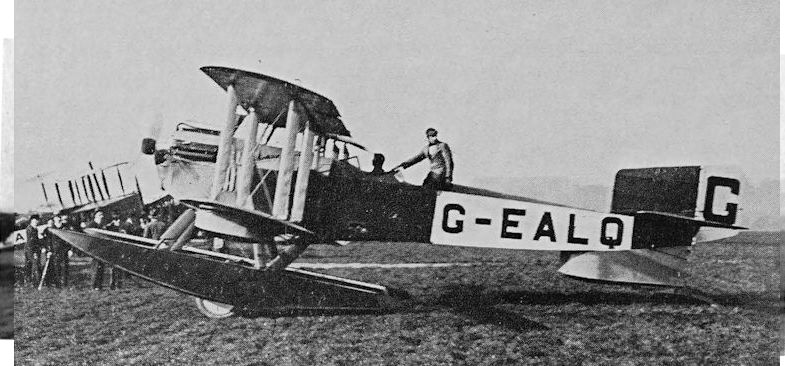
The remarkable series of Fairey III variants which spanned two decades stemmed from the two experimental two seat patrol seaplanes built by the Fairey Company in 1917. These bore constructor’s numbers F.127 and F.128, and in the easy manner of the period became known as the Fairey F.127 and Fairey F.128 respectively. Their Admiralty serial numbers N9 and N10 were used as an alternative nomenclature. The F.127, intended for shipboard operation, was a sesquiplane powered by a 190 h.p. RollsRoyce Falcon I water-cooled engine, and after trials at Hamble and the Isle of Grain, carried out early catapult trials on H.M.S. Slinger. In 1919 it was repurchased from the Admiralty by the manufacturers and demilitarised as a civil aircraft with the temporary marking K-103, subsequently flying as a Fairey III G-EAAJ. It was modified with equal-span wings and Maori engine, and commencing on May 3, Sidney Pickles made a few flights in it from Blackfriars to the Thanet towns, landings being made in and around the Medway estuary to deliver the Evening News. The veteran was sold in Norway in May 1920, and thus the ancestor of a line of famous British naval aeroplanes spent the major portion of its life in civil colours in a foreign land. It was heard of in August 1927 at Eidsvold, owned by Bjarne Nielson, and finally went to the scrap heap in February 1929. The fuselage and empennage of the second experimental aircraft, the F.128, N10, were identical with those of the F.127, but it had equal-span folding wings, Fairey Patent Camber Gear, a larger fin, a 260 h.p. Maori engine and side radiators. A more formal designation - Fairey III - was then bestowed upon it, but at the end of 1917 it became a landplane with the radiator placed in the conventional position behind the airscrew. In this form it was known as the Fairey IIIA, and in 1919 was bought back by the makers to become a civil aeroplane G-EALQ. Later it was modified as a single-seat seaplane for entry in the Schneider Trophy Race held at Bournemouth on September 10, 1919. The wing span was reduced from 46 to 28 ft. and a 450 h.p. Napier Lion installed with side radiators, the designation reverting once more to Fairey III. Piloted by Lt.-Col. Vincent Nicholl, D.S.O., 'LQ was the only entry to return to moorings under its own power, but fog eventually caused the event to be declared void. A year later, on September 17, 1920, the same pilot arrived at Martlesham flying the same machine greatly modified for the Air Ministry’s commercial amphibian competition. Standard 46 ft. folding wings had been replaced, a cockpit for two passengers side by side was provided behind the pilot and manually retractable, narrow-track wheels were fitted between the floats. Although it performed creditably, making slow-speed runs at 47:25 m.p.h. and completing various sea trials at Felixstowe, no prize was awarded owing to its failure to take off after the 24 hours mooring test on September 26-27. The veteran’s useful life came to an end in 1922 after a period on communications duties between Hamble and the Isle of Grain.
Fifty Fairey IIIA naval floatplanes, powered by 260 h.p. Sunbeam Maori engines, built in 1918, saw little service and were put up for disposal. One of these, N2876, was acquired by the Navarro Aviation Company as G-EADZ, but proposals to use it as a landplane for joyriding came to nought. Lt.-Col. G. L. P. Henderson then converted it to approximate Fairey IIIC standard under a new registration G-EAMY, by fitting a 360 h.p. Rolls-Royce Eagle VIII engine before shipment to Sweden in company with the second prototype Fairey IIIG G-EAPV, formerly N2255. The latter made three trans-Baltic proving flights between Stockholm and Helsingfors with passengers and newspapers during the summer of 1920, afterwards doing pleasure flying for the P.O. Flygkompani at Barkaby. Both machines operated on skis during the winter and were modified to carry a passenger beside the pilot and four others in the rear cockpit. Unfortunately ’MY crashed in an inaccessible forest of 50 ft. trees due to the breakage of a rudder control cable.
A Fairey IIIC, G-EARS, built with the main production batch in June 1919, was used as a demonstrator by the manufacturers during 1920, after which it was sold to the Aircraft Disposal Co. Ltd. Two years later, in June 1922, another Fairey IIIC from this batch was civilianised in India by the makers as G-EBDI for the Calcutta-Vancouver section of Major W. T. Blake’s proposed World Flight. On August 19, 1922, piloted by Capt. Norman Macmillan and carrying cameraman Geoffrey Malins, it became the first seaplane to take off from the Hoogli River, course being set for Akyab in Assam. An air lock in the fuel system caused a forced landing in a gale near the island of Lukhidia Char in the Bay of Bengal, and eventually ’DI turned turtle with a waterlogged float. Its crew were rescued after six gruelling days afloat on the wreckage, which sank following an attempt to tow it to Chittagong.
<...>
SPECIFICATION
Manufacturers: The Fairey Aviation Co. Ltd., Hayes, Mx., and Hamble Aerodrome, near Southampton, Hants.
Power Plants:
(Fairey III) One 450 h.p. Napier Lion.
(Fairey IIIA) One 260 h.p. Sunbeam Maori II.
(Fairey IIIC) One 360 h.p. Rolls-Royce Eagle VIII.
Fairey III (Lion) Seaplane Fairey III Amphibian Fairey IIIA Landplane Fairey IIIC Seaplane
Span 28 ft. 0 in. 46 ft. 1 1/4 in. 46 ft. 2 in. 46 ft. 1 1/4 in.
Length - 34 ft. 4 in. 31 ft. 0 in. 36 ft. 0 in. 12 ft. 1 3/4 in.
Height - 12 ft. 0 on. 10 ft. 8 in.
Wing area - 488 sq. ft. 476 sq. ft. 476 sq. ft.
Tare weight - 3,771 lb. 2,532 lb. (G-EADZ) 3,549 lb. (G-EARS)
All-up weight 5,000 Ib. 5,250 Ib. 3.608 Ib. (G-EADZ) 5,050 lb. (G-EARS)
Maximum speed - 118 m.p.h. 109,5 m.p.h. 101 m.p.h.
Cruising speed - 82 m.p.h. - -
Initial climb - - 750 ft./min. 600 ft./min.
Ceiling - - 15,000 ft. 9,100 ft.
Duration - - 4 1/2 hours 5 hours
The remarkable series of Fairey III variants which spanned two decades stemmed from the two experimental two seat patrol seaplanes built by the Fairey Company in 1917. These bore constructor’s numbers F.127 and F.128, and in the easy manner of the period became known as the Fairey F.127 and Fairey F.128 respectively. Their Admiralty serial numbers N9 and N10 were used as an alternative nomenclature. The F.127, intended for shipboard operation, was a sesquiplane powered by a 190 h.p. RollsRoyce Falcon I water-cooled engine, and after trials at Hamble and the Isle of Grain, carried out early catapult trials on H.M.S. Slinger. In 1919 it was repurchased from the Admiralty by the manufacturers and demilitarised as a civil aircraft with the temporary marking K-103, subsequently flying as a Fairey III G-EAAJ. It was modified with equal-span wings and Maori engine, and commencing on May 3, Sidney Pickles made a few flights in it from Blackfriars to the Thanet towns, landings being made in and around the Medway estuary to deliver the Evening News. The veteran was sold in Norway in May 1920, and thus the ancestor of a line of famous British naval aeroplanes spent the major portion of its life in civil colours in a foreign land. It was heard of in August 1927 at Eidsvold, owned by Bjarne Nielson, and finally went to the scrap heap in February 1929. The fuselage and empennage of the second experimental aircraft, the F.128, N10, were identical with those of the F.127, but it had equal-span folding wings, Fairey Patent Camber Gear, a larger fin, a 260 h.p. Maori engine and side radiators. A more formal designation - Fairey III - was then bestowed upon it, but at the end of 1917 it became a landplane with the radiator placed in the conventional position behind the airscrew. In this form it was known as the Fairey IIIA, and in 1919 was bought back by the makers to become a civil aeroplane G-EALQ. Later it was modified as a single-seat seaplane for entry in the Schneider Trophy Race held at Bournemouth on September 10, 1919. The wing span was reduced from 46 to 28 ft. and a 450 h.p. Napier Lion installed with side radiators, the designation reverting once more to Fairey III. Piloted by Lt.-Col. Vincent Nicholl, D.S.O., 'LQ was the only entry to return to moorings under its own power, but fog eventually caused the event to be declared void. A year later, on September 17, 1920, the same pilot arrived at Martlesham flying the same machine greatly modified for the Air Ministry’s commercial amphibian competition. Standard 46 ft. folding wings had been replaced, a cockpit for two passengers side by side was provided behind the pilot and manually retractable, narrow-track wheels were fitted between the floats. Although it performed creditably, making slow-speed runs at 47:25 m.p.h. and completing various sea trials at Felixstowe, no prize was awarded owing to its failure to take off after the 24 hours mooring test on September 26-27. The veteran’s useful life came to an end in 1922 after a period on communications duties between Hamble and the Isle of Grain.
Fifty Fairey IIIA naval floatplanes, powered by 260 h.p. Sunbeam Maori engines, built in 1918, saw little service and were put up for disposal. One of these, N2876, was acquired by the Navarro Aviation Company as G-EADZ, but proposals to use it as a landplane for joyriding came to nought. Lt.-Col. G. L. P. Henderson then converted it to approximate Fairey IIIC standard under a new registration G-EAMY, by fitting a 360 h.p. Rolls-Royce Eagle VIII engine before shipment to Sweden in company with the second prototype Fairey IIIG G-EAPV, formerly N2255. The latter made three trans-Baltic proving flights between Stockholm and Helsingfors with passengers and newspapers during the summer of 1920, afterwards doing pleasure flying for the P.O. Flygkompani at Barkaby. Both machines operated on skis during the winter and were modified to carry a passenger beside the pilot and four others in the rear cockpit. Unfortunately ’MY crashed in an inaccessible forest of 50 ft. trees due to the breakage of a rudder control cable.
A Fairey IIIC, G-EARS, built with the main production batch in June 1919, was used as a demonstrator by the manufacturers during 1920, after which it was sold to the Aircraft Disposal Co. Ltd. Two years later, in June 1922, another Fairey IIIC from this batch was civilianised in India by the makers as G-EBDI for the Calcutta-Vancouver section of Major W. T. Blake’s proposed World Flight. On August 19, 1922, piloted by Capt. Norman Macmillan and carrying cameraman Geoffrey Malins, it became the first seaplane to take off from the Hoogli River, course being set for Akyab in Assam. An air lock in the fuel system caused a forced landing in a gale near the island of Lukhidia Char in the Bay of Bengal, and eventually ’DI turned turtle with a waterlogged float. Its crew were rescued after six gruelling days afloat on the wreckage, which sank following an attempt to tow it to Chittagong.
<...>
SPECIFICATION
Manufacturers: The Fairey Aviation Co. Ltd., Hayes, Mx., and Hamble Aerodrome, near Southampton, Hants.
Power Plants:
(Fairey III) One 450 h.p. Napier Lion.
(Fairey IIIA) One 260 h.p. Sunbeam Maori II.
(Fairey IIIC) One 360 h.p. Rolls-Royce Eagle VIII.
Fairey III (Lion) Seaplane Fairey III Amphibian Fairey IIIA Landplane Fairey IIIC Seaplane
Span 28 ft. 0 in. 46 ft. 1 1/4 in. 46 ft. 2 in. 46 ft. 1 1/4 in.
Length - 34 ft. 4 in. 31 ft. 0 in. 36 ft. 0 in. 12 ft. 1 3/4 in.
Height - 12 ft. 0 on. 10 ft. 8 in.
Wing area - 488 sq. ft. 476 sq. ft. 476 sq. ft.
Tare weight - 3,771 lb. 2,532 lb. (G-EADZ) 3,549 lb. (G-EARS)
All-up weight 5,000 Ib. 5,250 Ib. 3.608 Ib. (G-EADZ) 5,050 lb. (G-EARS)
Maximum speed - 118 m.p.h. 109,5 m.p.h. 101 m.p.h.
Cruising speed - 82 m.p.h. - -
Initial climb - - 750 ft./min. 600 ft./min.
Ceiling - - 15,000 ft. 9,100 ft.
Duration - - 4 1/2 hours 5 hours
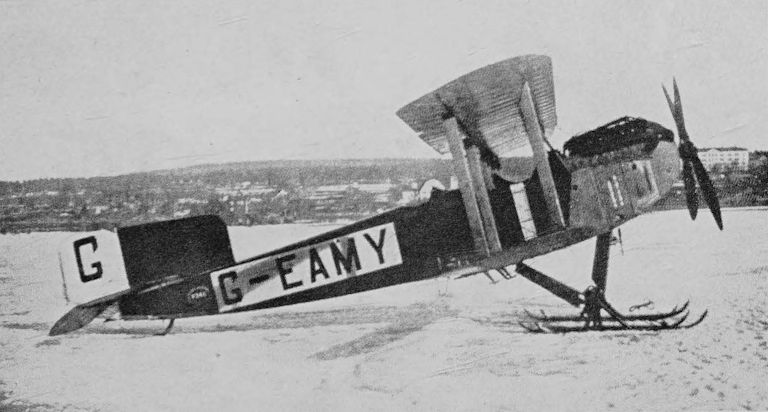
One of Col. G. L. P. Henderson’s Fairey IIIC aircraft on skis in Sweden, 1920.
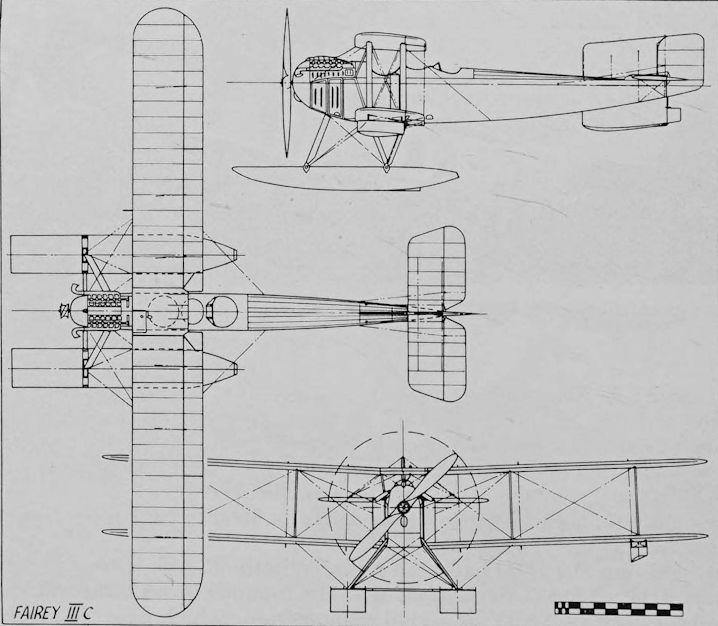
IIIC civil conversion
FELIXSTOWE F.3
Patrol boat designed by John Porte, powered by two 345 h.p. Rolls-Royce Eagle VIII. Two British civil aircraft only: G-EAQT, c/n S.607, ex N4019, built by Short Bros. Ltd. at Rochester 1918, remodelled with cabin for L. Horden 3.20, shipped to Botany Bay, not erected; G-EBDQ,
ex N4177, built by the Phoenix Dynamo Co. Ltd., Bradford, 1918, shipped to Montreal by the Aircraft Disposal Co. Ltd. 7.22 for the final, Atlantic, section of Major W. T. Blake’s abortive world flight, sold in Canada 11.22.
Span, 102 ft. 0 in. Length, 49 ft. 2in. Tare wt., 7,958 lb. A.U.W., 12,235 lb. Max. speed, 91 m.p.h
GOSPORT FLYING-BOAT
Felixstowe F.5 four seater powered by two 345 h.p. Rolls-Royce Eagle VIII. One civil aircraft only, G-EAIK, c/n G6/100, an R.A.F. aircraft N4634, built at Northam 1919 by the Gosport Aviation Co. Ltd., C. of A. issued 7.8.19, registered to the makers as a ‘Gosport Flying Boat’. Flown to Amsterdam 8.8.19 by Lt.-Col. R. Hope-Vere for exhibition at the First Air Traffic Exhibition and demonstration flights from the River Ij. Returned to Felixstowe 28.8.19, withdrawn from use at C. of A. expiry.
Span, 102 ft. 0 in. Length, 49 ft. 2 in. Tare wt., 7,958 lb. A.U.W., 12,295 lb Max. speed, 93 m.p.h,
Patrol boat designed by John Porte, powered by two 345 h.p. Rolls-Royce Eagle VIII. Two British civil aircraft only: G-EAQT, c/n S.607, ex N4019, built by Short Bros. Ltd. at Rochester 1918, remodelled with cabin for L. Horden 3.20, shipped to Botany Bay, not erected; G-EBDQ,
ex N4177, built by the Phoenix Dynamo Co. Ltd., Bradford, 1918, shipped to Montreal by the Aircraft Disposal Co. Ltd. 7.22 for the final, Atlantic, section of Major W. T. Blake’s abortive world flight, sold in Canada 11.22.
Span, 102 ft. 0 in. Length, 49 ft. 2in. Tare wt., 7,958 lb. A.U.W., 12,235 lb. Max. speed, 91 m.p.h
GOSPORT FLYING-BOAT
Felixstowe F.5 four seater powered by two 345 h.p. Rolls-Royce Eagle VIII. One civil aircraft only, G-EAIK, c/n G6/100, an R.A.F. aircraft N4634, built at Northam 1919 by the Gosport Aviation Co. Ltd., C. of A. issued 7.8.19, registered to the makers as a ‘Gosport Flying Boat’. Flown to Amsterdam 8.8.19 by Lt.-Col. R. Hope-Vere for exhibition at the First Air Traffic Exhibition and demonstration flights from the River Ij. Returned to Felixstowe 28.8.19, withdrawn from use at C. of A. expiry.
Span, 102 ft. 0 in. Length, 49 ft. 2 in. Tare wt., 7,958 lb. A.U.W., 12,295 lb Max. speed, 93 m.p.h,
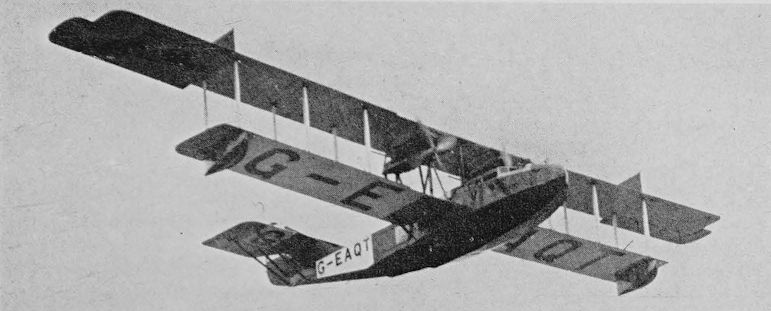
Felixstowe F.3
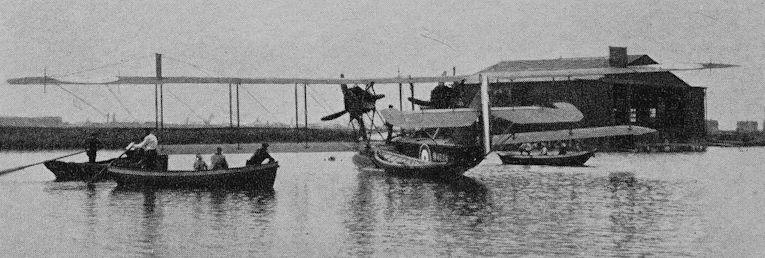
Gosport Flying-Boat
GRAHAME-WHITE G.W.E.9 GANYMEDE
The twin fuselage three engined G.W.E.4 Ganymede bomber of 1918, converted for civil use by The Grahame-White Aviation Co. Ltd., at Hendon 1919. One aircraft only, G-EAMW, c/n G.W.E.9, powered by two 450 h.p. Napier Lion, formerly C3481, registered to the manufacturers 12.9.19, burned 9.20. Two pilots in an open cockpit sat ahead of about 12 passengers in a glazed central nacelle. Span, 89 ft. 3 in. Length, 49 ft. 9 in.
The twin fuselage three engined G.W.E.4 Ganymede bomber of 1918, converted for civil use by The Grahame-White Aviation Co. Ltd., at Hendon 1919. One aircraft only, G-EAMW, c/n G.W.E.9, powered by two 450 h.p. Napier Lion, formerly C3481, registered to the manufacturers 12.9.19, burned 9.20. Two pilots in an open cockpit sat ahead of about 12 passengers in a glazed central nacelle. Span, 89 ft. 3 in. Length, 49 ft. 9 in.
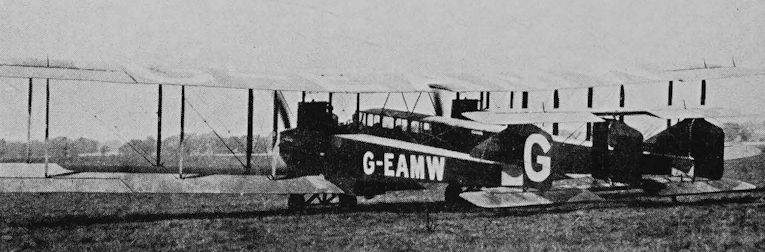
Grahame-White G.W.E.9 Ganymede
GRAHAME-WHITE G.W.E.7
Luxury transport with folding wings designed by M. Boudot to seat four passengers in the cabin in the nose and the pilot in a glazed compartment between the centre section struts. One aircraft only, G-EALR, c/n G.W.E.7, powered by two 320 h.p. Rolls-Royce Eagle V, built at Hendon by The Grahame-White Aviation Co. Ltd. 8.19, damaged beyond repair in forced landing in 1919, burned 1920. Span, 60 ft. 0 in. Length 309 ft. 0 in. Tare wt., 5,785 lb, A.U.W.,.7,047 lb, Max. speed, 116 m.p.h. Cruise, 104 m.p.h.
Luxury transport with folding wings designed by M. Boudot to seat four passengers in the cabin in the nose and the pilot in a glazed compartment between the centre section struts. One aircraft only, G-EALR, c/n G.W.E.7, powered by two 320 h.p. Rolls-Royce Eagle V, built at Hendon by The Grahame-White Aviation Co. Ltd. 8.19, damaged beyond repair in forced landing in 1919, burned 1920. Span, 60 ft. 0 in. Length 309 ft. 0 in. Tare wt., 5,785 lb, A.U.W.,.7,047 lb, Max. speed, 116 m.p.h. Cruise, 104 m.p.h.
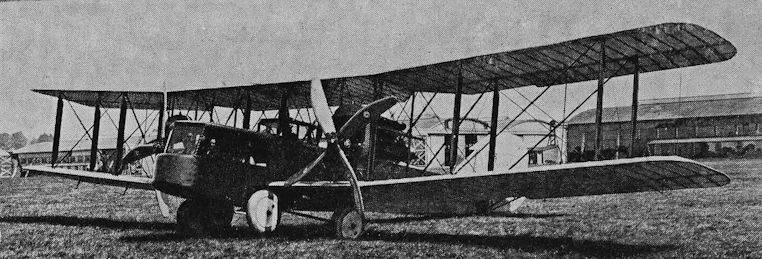
Three-quarter front view of the Grahame-White "Aero-Limousine."
Grahame-White G.W.E.7
Grahame-White G.W.E.7
GRAHAME-WHITE G.W.E.6 BANTAM
Single seat sporting biplane powered by one 80 h.p. Le Rhone rotary, designed by M. Boudot and built by The Grahame-White Aviation Co. Ltd. at Hendon 1919. Two aircraft only: K-150/G-EAFK, c/n G.W.E.6; K-153/G-EAFL, c/n G.W.E.6A; both raced in 1919 Aerial Derby and at Hendon. K-150 crashed into hangar at Hendon 6.7.19, ’FL stored until reconditioned by Gnat Aero Co., Shoreham in 1926. Span, 20 ft. 0 in. Length, 16 ft. 6 in. Tare wt., 640 lb. A.U.W., 995 lb. Max. speed, 100 m.p.h.
Single seat sporting biplane powered by one 80 h.p. Le Rhone rotary, designed by M. Boudot and built by The Grahame-White Aviation Co. Ltd. at Hendon 1919. Two aircraft only: K-150/G-EAFK, c/n G.W.E.6; K-153/G-EAFL, c/n G.W.E.6A; both raced in 1919 Aerial Derby and at Hendon. K-150 crashed into hangar at Hendon 6.7.19, ’FL stored until reconditioned by Gnat Aero Co., Shoreham in 1926. Span, 20 ft. 0 in. Length, 16 ft. 6 in. Tare wt., 640 lb. A.U.W., 995 lb. Max. speed, 100 m.p.h.
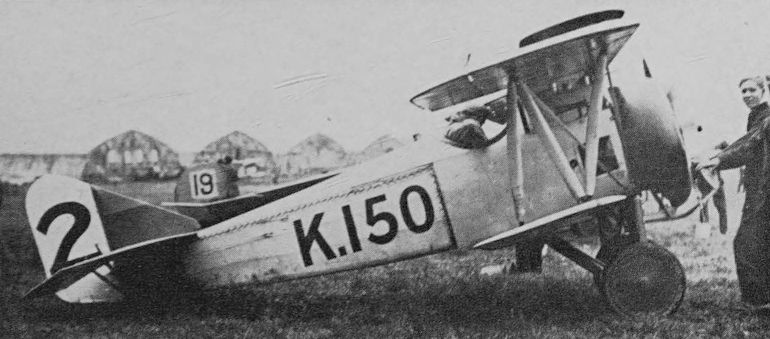
Grahame-White G.W.E.6 Bantam
Handley Page O/400
Although the distinction of being G-EAAA, the first British civil aeroplane, fell to a de Havilland D.H.9, that of receiving the first British Certificate of Airworthiness went to a Handley Page O/400. Over 400 of these twin
Eagle VIII engined heavy bombers were built during 1918-19 and, retrospectively allotted type number H.P.12, made useful interim civil transports. In spite of their 100 ft. wing span and general immensity, they were structurally simple, the fuselage being a braced box girder of spruce longerons and cross struts, fabric covered, as were the wooden, folding wings. C. of A. No. 1 was issued on May 1, 1919 to Handley Page O/400 F5414, which on that day became G-EAAF in company with three others, certificated as G-EAAE, ’AG and ’AW respectively. They were the first of 43 civil conversions, a few of which were exported with full C. of A. to the Chinese Government. Thirty-four were of British registry, all were owned by the manufacturers, and none ever suffered a change of ownership. Scheduled services and charter flying were undertaken by a subsidiary concern, Handley Page Air Transport Ltd. under the management of George Woods-Humphery with Lt.-Col. W. F. Sholto Douglas, now Lord Douglas of Kirtleside, chairman of B.E.A.C., as chief pilot. He carried 10 passengers from Cricklewood to Alexandra Park Aerodrome, Manchester, on May 4, 1919 in D8350, not yet painted up as G-EAAE. On the following day he flew North with a 1,500 lb. load of newspapers, which were dropped over Carlisle, Dundee, Aberdeen (where Major Ord-Lees, the ‘Guardian Angel’ demonstrator, left the aircraft by parachute) and Montrose, a landing being made at Edinburgh. The passengers sat in hastily fitted wicker chairs in a draughty fuselage without soundproofing or windows, only the fortunate, but helmeted, occupants of the front and rear gunners’ cockpits being able to view the countryside. Within three months, however, Handley Page Ltd. had produced the O/7 version, fitted with a properly appointed and windowed cabin for 14 passengers. Apart from the windows, the chief external recognition features were the engine nacelles, lengthened rearward to accommodate the fuel tanks, banished from the fuselage to increase cabin space. Nacelle struts were modified and the oil tanks were repositioned under the upper mainplane. The first O/7 bore no markings other than its conversion number H.P.1, but was, in fact, K-162. The first civil O/400 was also converted to O/7 standard and repainted as G-5414 flew to Amsterdam for exhibition at the First Air Traffic Exhibition of August 1919. A week later, on August 25, the company inaugurated its daily Continental services when Major E. L. Foote carried seven passengers in G-EAAE from Cricklewood to Le Bourget. A month later, on September 22, G-EAAW, flying as G-5417, flew the first Brussels service. Customs clearances took place at Hounslow Heath until the London terminal aerodrome was opened at Plough Lane, Waddon (Croydon), on April 1, 1920, after which Customs were also available at Cricklewood. The aircraft were equipped with the first Marconi R/T, and their pilots included the famous - G. P. Olley, A. S. Wilcockson, F. Dismore, H. H. Perry, W. Rogers, R. Vaughan Fowler, W. L. Hope, H. G. Brackley, E. L. Foote and R. H. McIntosh. In the first nine months of operation nearly 1,500 passengers and 40 tons of freight were carried in eight O/400s and two O/7s G-EAAF and ’MA. The original four O/400s were now joined by ’KF, 'KG and ’LX-LZ, nil-hour machines, stored since construction by the Metropolitan Wagon Co. Ltd. at Birmingham in the previous year. They were all fitted with windows and furnished cabins for seven passengers, the fuel tanks remaining in the fuselage. Short nacelles were therefore retained, and they continued to be styled O/400s. A windowless O/400 G-EAKE, with seats for 10 passengers was flown to Copenhagen in August 1919 by two R.A.F. officers, one of whom was the Norwegian Tryggve Gran, who became famous on July 30, 1914 by making the first flight across the North Sea in a Bleriot monoplane. His O/400 was unlucky, suffering an accident near Lillisand, Norway on September 6, 1919, followed by a rebuild and a second crash, this time beyond repair, near Stockholm in the following June. An equally unlucky giant was G-EAMC, the Daily Telegraph entry for the £10,000 Daily Mail prize for the first flight from Cairo to the Cape. With Maj. H. G. Brackley as pilot and Capt. Frederick Tymms navigating, the machine left Cricklewood on January 25, 1920, picked up the sponsor’s correspondent Major C. C. Turner at Cairo on February 20 and set off southward. Five days later the flight ended 6 miles north of El Shereik, Sudan, G-EAMC being damaged beyond repair in a crosswind forced landing with jammed controls following severe tail flutter.
An awakening to the possibilities of air transport was at this time taking place overseas, China already possessing at least seven Handley Page O/7s. Poland also bought them, and the Handley Page Indo Burmese Transport Co. Ltd. was formed to operate the O/7 G-IAAA. In December 1919 a standard O/400 G-EAMD was flown to Poland by E. D. C. Hearne with a long-range fuel tank fitted on top of the fuselage, and a O/7 G-EANV named ‘Commando’ was flown in South Africa by Major McIntyre, who made pleasure and advertising flights over Cape Town. At the beginning of 1921 these aircraft were followed abroad by three other O/7s G-EAPA, 'PB and ’QZ, all of which had seen a year’s service on the London-Paris route.
The company’s passenger and freight services were augmented in 1920 by the route to Amsterdam, and two further variants of the O/7 were devised. The first, known as the O/11, carried mixed traffic, two passengers in the bow cockpit, three in a cabin in the rear fuselage and freight in a large hold amidships. Three machines of this type, G-EASL - ’SN, were in use until their Cs. of A. expired in March 1921. It was in one of these that R. H. McIntosh inaugurated the company’s internal service to Castle Bromwich on December 22, 1920. The freighters were later joined by a fleet of nine aircraft G-EASX, ’SY, ’TG - ’TN, fitted for the carriage of 12 passengers and designated the O/10. All were in daily service between Croydon and the Continent by August 1920.
The Daily Express had earlier announced a prize of £10,000 for the first flight to India and back, one of the several entries being a special long-range O/400 G-EASO. Named ‘Old Carthusian II’, it was fitted with Napier Lions and therefore unique. Although machine and crew, Maj. A. Stuart MacLaren and Capt. J. A. Barton, were in readiness at Croydon on May 14, 1920, strained relations with the Arabs compelled the R.A.F. Middle East Command to forbid flights east of Cairo. The competition was therefore abandoned and G-EASO dismantled.
The end of 1920 was a black period for the embryo air transport industry and particularly for Handley Pages. On December 14, 1920, the O/7 G-EAMA was lost in a disastrous crash at Golders Green, in which the pilot Robert Bager and three others were killed after striking a tree on take off. By the end of the month, intense competition from government-subsidised French airlines had compelled the abandonment of most British services. Handley Pages fought the inevitable until February 1921, when they too ceased operations, one of the O/10s flying the final service. Following a Government enquiry under the leadership of the late Lord Londonderry, then the Under-Secretary of State for Air, operations were resumed on March 21, 1921, with a subsidised reduction in the Paris fares to the French level of six guineas single and £12 return. Freight did not bear a subsidy, and in the following month not only were the company’s surviving O/11 freighters G-EASM and ’SN scrapped but the O/10s ’SX - "SZ were sold abroad. On May 27 the landing of a O/10 at Croydon saw the end of Cricklewood as an air terminal, but it remained the maintenance base, necessitating daily positioning flights. Some difficulty was experienced in taking off from Croydon with full load, and an aircraft was despatched to Martlesham for weighing, after which the all-up weight was reduced from 13,000 to 12,050 lb. by removing all wireless gear, limiting the passengers to 10 and the maximum fuel and oil load to 180 and 12 gallons respectively. Thereafter they gave no trouble, but by 1922 the new Handley Page W8bs were coming into service, and Croydon saw the war-time veterans no more. Last to go to the breaker’s yard was G-EATH, which, as late as May 1923, inaugurated a thrice-weekly route from Paris to Basle and Zurich. Although based at Le Bourget it occasionally came to Croydon on Saturday afternoons, and after maintenance left again on Monday mornings. In the following September it made its last flight, from Zurich to London in the day - surely no mean feat for a O/10. It was then picketed behind the hangars to fall into dereliction, a sad fate for the last of a worthy line.
During their service careers, two O/10s were the subject of interesting modifications. During the development of the new Handley Page W8 in 1920, interest in ‘hands off’ flight quickened to the point where an early automatic pilot, the Aveline Stabiliser, was invented. The prototype was fitted in G-EATN, and during the French Government’s Competition in January 1921, was repeatedly flown ‘hands off’ by H. G. Brackley for periods of over an hour. On January 8 the device brought 'TN from Lympne to London through bad weather, but engine trouble caused a forced landing in a fog-free field at Gravesend. G-EATK was flown to Filton during the winter of 1921, where, in collaboration with the Bristol Aeroplane Co. Ltd., the Eagles were replaced by Jupiter radials in newly designed mountings. A net reduction of 900 lb. was thereby effected in the tare weight. G. P. Olley, who did the test flying, recorded an appreciable increase in the rate of climb and top speed, but with the new Handley on W8bs in the offing, the proposal to re-engine the whole fleet was shelved.
SPECIFICATION
Manufacturers: (1) Handley Page Ltd., Cricklewood, London, N.W.2; (2) The Metropolitan Wagon Co. Ltd., Birmingham; (3) The Birmingham Carriage Co. Ltd., Birmingham.
Power Plants:
Two 360 h.p. Rolls-Royce Eagle VIII.
Two 436 h.p. Bristol Jupiter TV.
Two 450 h.p. Napier Lion II.
Dimensions: Span, 100 ft. 0 in. Length, 62 ft. 10 1/4 in. Height, 22 ft. 0 in. Wing area, 1,648 sq. ft.;
Weights: Tare weight (Eagle VIII), 8,326 lb. (Jupiter IV), 7,526 Ib.
All-up weight (Eagle VIII), 12,050 lb. (Jupiter IV), 12,050 lb.
Performance:
(Eagle VIII) Maximum speed, 97:5 m.p.h. Ceiling, 8,500 ft. Duration 7 1/2 hours.
(Jupiter IV) Initial climb, 500 ft./min.
Although the distinction of being G-EAAA, the first British civil aeroplane, fell to a de Havilland D.H.9, that of receiving the first British Certificate of Airworthiness went to a Handley Page O/400. Over 400 of these twin
Eagle VIII engined heavy bombers were built during 1918-19 and, retrospectively allotted type number H.P.12, made useful interim civil transports. In spite of their 100 ft. wing span and general immensity, they were structurally simple, the fuselage being a braced box girder of spruce longerons and cross struts, fabric covered, as were the wooden, folding wings. C. of A. No. 1 was issued on May 1, 1919 to Handley Page O/400 F5414, which on that day became G-EAAF in company with three others, certificated as G-EAAE, ’AG and ’AW respectively. They were the first of 43 civil conversions, a few of which were exported with full C. of A. to the Chinese Government. Thirty-four were of British registry, all were owned by the manufacturers, and none ever suffered a change of ownership. Scheduled services and charter flying were undertaken by a subsidiary concern, Handley Page Air Transport Ltd. under the management of George Woods-Humphery with Lt.-Col. W. F. Sholto Douglas, now Lord Douglas of Kirtleside, chairman of B.E.A.C., as chief pilot. He carried 10 passengers from Cricklewood to Alexandra Park Aerodrome, Manchester, on May 4, 1919 in D8350, not yet painted up as G-EAAE. On the following day he flew North with a 1,500 lb. load of newspapers, which were dropped over Carlisle, Dundee, Aberdeen (where Major Ord-Lees, the ‘Guardian Angel’ demonstrator, left the aircraft by parachute) and Montrose, a landing being made at Edinburgh. The passengers sat in hastily fitted wicker chairs in a draughty fuselage without soundproofing or windows, only the fortunate, but helmeted, occupants of the front and rear gunners’ cockpits being able to view the countryside. Within three months, however, Handley Page Ltd. had produced the O/7 version, fitted with a properly appointed and windowed cabin for 14 passengers. Apart from the windows, the chief external recognition features were the engine nacelles, lengthened rearward to accommodate the fuel tanks, banished from the fuselage to increase cabin space. Nacelle struts were modified and the oil tanks were repositioned under the upper mainplane. The first O/7 bore no markings other than its conversion number H.P.1, but was, in fact, K-162. The first civil O/400 was also converted to O/7 standard and repainted as G-5414 flew to Amsterdam for exhibition at the First Air Traffic Exhibition of August 1919. A week later, on August 25, the company inaugurated its daily Continental services when Major E. L. Foote carried seven passengers in G-EAAE from Cricklewood to Le Bourget. A month later, on September 22, G-EAAW, flying as G-5417, flew the first Brussels service. Customs clearances took place at Hounslow Heath until the London terminal aerodrome was opened at Plough Lane, Waddon (Croydon), on April 1, 1920, after which Customs were also available at Cricklewood. The aircraft were equipped with the first Marconi R/T, and their pilots included the famous - G. P. Olley, A. S. Wilcockson, F. Dismore, H. H. Perry, W. Rogers, R. Vaughan Fowler, W. L. Hope, H. G. Brackley, E. L. Foote and R. H. McIntosh. In the first nine months of operation nearly 1,500 passengers and 40 tons of freight were carried in eight O/400s and two O/7s G-EAAF and ’MA. The original four O/400s were now joined by ’KF, 'KG and ’LX-LZ, nil-hour machines, stored since construction by the Metropolitan Wagon Co. Ltd. at Birmingham in the previous year. They were all fitted with windows and furnished cabins for seven passengers, the fuel tanks remaining in the fuselage. Short nacelles were therefore retained, and they continued to be styled O/400s. A windowless O/400 G-EAKE, with seats for 10 passengers was flown to Copenhagen in August 1919 by two R.A.F. officers, one of whom was the Norwegian Tryggve Gran, who became famous on July 30, 1914 by making the first flight across the North Sea in a Bleriot monoplane. His O/400 was unlucky, suffering an accident near Lillisand, Norway on September 6, 1919, followed by a rebuild and a second crash, this time beyond repair, near Stockholm in the following June. An equally unlucky giant was G-EAMC, the Daily Telegraph entry for the £10,000 Daily Mail prize for the first flight from Cairo to the Cape. With Maj. H. G. Brackley as pilot and Capt. Frederick Tymms navigating, the machine left Cricklewood on January 25, 1920, picked up the sponsor’s correspondent Major C. C. Turner at Cairo on February 20 and set off southward. Five days later the flight ended 6 miles north of El Shereik, Sudan, G-EAMC being damaged beyond repair in a crosswind forced landing with jammed controls following severe tail flutter.
An awakening to the possibilities of air transport was at this time taking place overseas, China already possessing at least seven Handley Page O/7s. Poland also bought them, and the Handley Page Indo Burmese Transport Co. Ltd. was formed to operate the O/7 G-IAAA. In December 1919 a standard O/400 G-EAMD was flown to Poland by E. D. C. Hearne with a long-range fuel tank fitted on top of the fuselage, and a O/7 G-EANV named ‘Commando’ was flown in South Africa by Major McIntyre, who made pleasure and advertising flights over Cape Town. At the beginning of 1921 these aircraft were followed abroad by three other O/7s G-EAPA, 'PB and ’QZ, all of which had seen a year’s service on the London-Paris route.
The company’s passenger and freight services were augmented in 1920 by the route to Amsterdam, and two further variants of the O/7 were devised. The first, known as the O/11, carried mixed traffic, two passengers in the bow cockpit, three in a cabin in the rear fuselage and freight in a large hold amidships. Three machines of this type, G-EASL - ’SN, were in use until their Cs. of A. expired in March 1921. It was in one of these that R. H. McIntosh inaugurated the company’s internal service to Castle Bromwich on December 22, 1920. The freighters were later joined by a fleet of nine aircraft G-EASX, ’SY, ’TG - ’TN, fitted for the carriage of 12 passengers and designated the O/10. All were in daily service between Croydon and the Continent by August 1920.
The Daily Express had earlier announced a prize of £10,000 for the first flight to India and back, one of the several entries being a special long-range O/400 G-EASO. Named ‘Old Carthusian II’, it was fitted with Napier Lions and therefore unique. Although machine and crew, Maj. A. Stuart MacLaren and Capt. J. A. Barton, were in readiness at Croydon on May 14, 1920, strained relations with the Arabs compelled the R.A.F. Middle East Command to forbid flights east of Cairo. The competition was therefore abandoned and G-EASO dismantled.
The end of 1920 was a black period for the embryo air transport industry and particularly for Handley Pages. On December 14, 1920, the O/7 G-EAMA was lost in a disastrous crash at Golders Green, in which the pilot Robert Bager and three others were killed after striking a tree on take off. By the end of the month, intense competition from government-subsidised French airlines had compelled the abandonment of most British services. Handley Pages fought the inevitable until February 1921, when they too ceased operations, one of the O/10s flying the final service. Following a Government enquiry under the leadership of the late Lord Londonderry, then the Under-Secretary of State for Air, operations were resumed on March 21, 1921, with a subsidised reduction in the Paris fares to the French level of six guineas single and £12 return. Freight did not bear a subsidy, and in the following month not only were the company’s surviving O/11 freighters G-EASM and ’SN scrapped but the O/10s ’SX - "SZ were sold abroad. On May 27 the landing of a O/10 at Croydon saw the end of Cricklewood as an air terminal, but it remained the maintenance base, necessitating daily positioning flights. Some difficulty was experienced in taking off from Croydon with full load, and an aircraft was despatched to Martlesham for weighing, after which the all-up weight was reduced from 13,000 to 12,050 lb. by removing all wireless gear, limiting the passengers to 10 and the maximum fuel and oil load to 180 and 12 gallons respectively. Thereafter they gave no trouble, but by 1922 the new Handley Page W8bs were coming into service, and Croydon saw the war-time veterans no more. Last to go to the breaker’s yard was G-EATH, which, as late as May 1923, inaugurated a thrice-weekly route from Paris to Basle and Zurich. Although based at Le Bourget it occasionally came to Croydon on Saturday afternoons, and after maintenance left again on Monday mornings. In the following September it made its last flight, from Zurich to London in the day - surely no mean feat for a O/10. It was then picketed behind the hangars to fall into dereliction, a sad fate for the last of a worthy line.
During their service careers, two O/10s were the subject of interesting modifications. During the development of the new Handley Page W8 in 1920, interest in ‘hands off’ flight quickened to the point where an early automatic pilot, the Aveline Stabiliser, was invented. The prototype was fitted in G-EATN, and during the French Government’s Competition in January 1921, was repeatedly flown ‘hands off’ by H. G. Brackley for periods of over an hour. On January 8 the device brought 'TN from Lympne to London through bad weather, but engine trouble caused a forced landing in a fog-free field at Gravesend. G-EATK was flown to Filton during the winter of 1921, where, in collaboration with the Bristol Aeroplane Co. Ltd., the Eagles were replaced by Jupiter radials in newly designed mountings. A net reduction of 900 lb. was thereby effected in the tare weight. G. P. Olley, who did the test flying, recorded an appreciable increase in the rate of climb and top speed, but with the new Handley on W8bs in the offing, the proposal to re-engine the whole fleet was shelved.
SPECIFICATION
Manufacturers: (1) Handley Page Ltd., Cricklewood, London, N.W.2; (2) The Metropolitan Wagon Co. Ltd., Birmingham; (3) The Birmingham Carriage Co. Ltd., Birmingham.
Power Plants:
Two 360 h.p. Rolls-Royce Eagle VIII.
Two 436 h.p. Bristol Jupiter TV.
Two 450 h.p. Napier Lion II.
Dimensions: Span, 100 ft. 0 in. Length, 62 ft. 10 1/4 in. Height, 22 ft. 0 in. Wing area, 1,648 sq. ft.;
Weights: Tare weight (Eagle VIII), 8,326 lb. (Jupiter IV), 7,526 Ib.
All-up weight (Eagle VIII), 12,050 lb. (Jupiter IV), 12,050 lb.
Performance:
(Eagle VIII) Maximum speed, 97:5 m.p.h. Ceiling, 8,500 ft. Duration 7 1/2 hours.
(Jupiter IV) Initial climb, 500 ft./min.
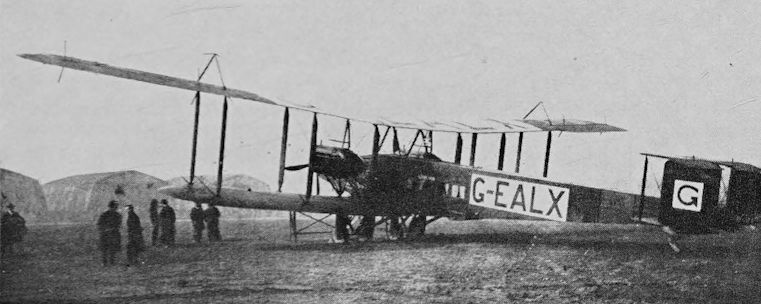
One of the seven seat Handley Page O/400s converted for use on the Continental services. These had short nacelles and only four windows.
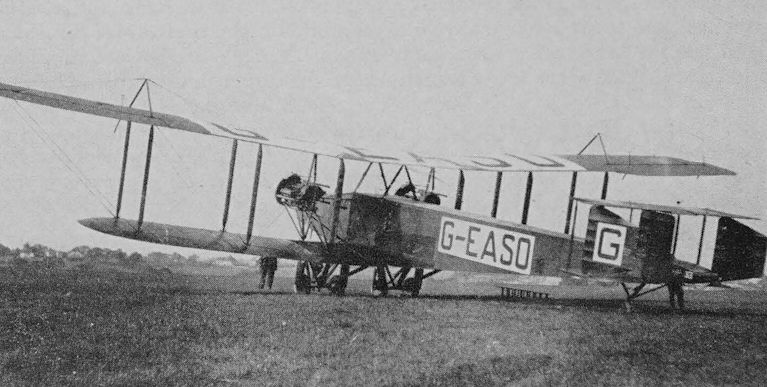
The Napier Lion engines of the India flight O/400 being run up at Cricklewood before departure to Croydon.
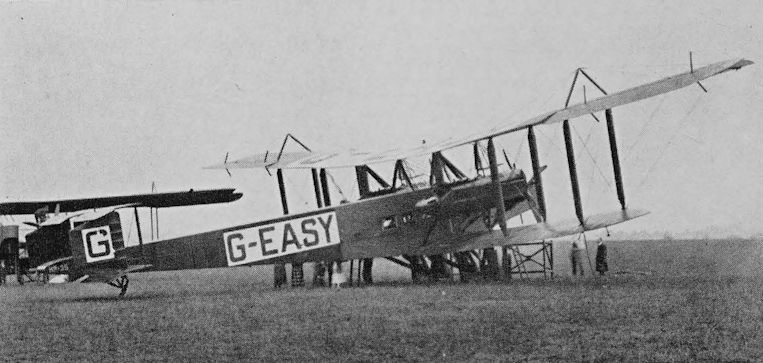
A Handley Page O/10 G-EASY. All civil ‘Handleys’ carried their conversion number on the extreme end of the fuselage.
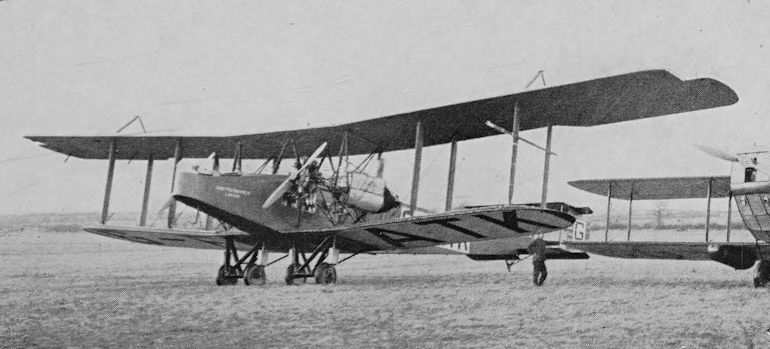
The Jupiter installation of G-EATK, with cowlings removed to show the disposition of the fuel tanks in the rear of the nacelle.
Handley Page O/10
Handley Page W8, W9 and W10
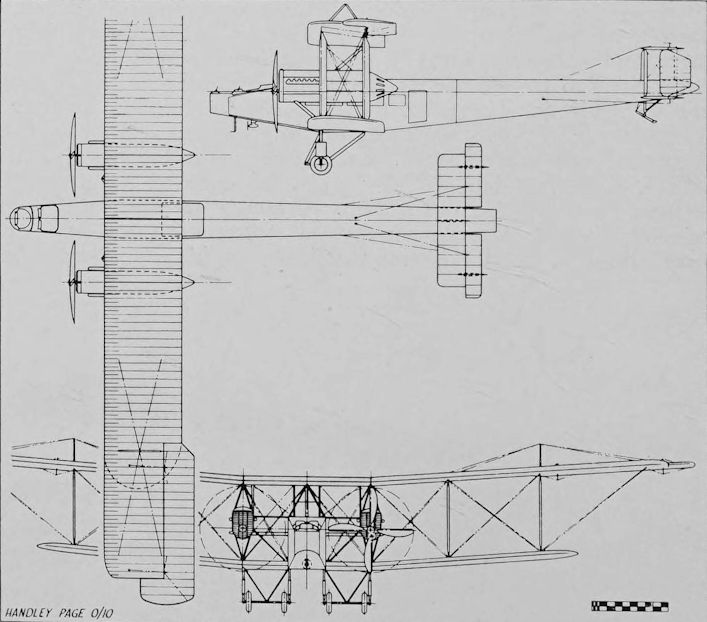
As soon as Handley Page Air Transport Ltd. was fairly launched with its fleet of converted O/400s, work began at Cricklewood on the construction of the firm’s first purely civil transport. It accommodated two pilots in an open cockpit forward of a roomy, well-glazed cabin for 15 passengers. Although embodying the well-proven wood and fabric construction of its predecessors, it was cleaner aerodynamically, of lower structural weight and fitted with two Napier Lions, 450 h.p. units renowned for their unequalled power/weight ratio. First intimation of the existence of the prototype G-EAPJ came early in 1920, when first flights were made at Cricklewood. It was obviously an outstanding aeroplane and on May 4, 1920 Capt. (later Professor, of Pterodactyl fame) G. R. T. Hill set up a British Class C.5 record by climbing the machine to 14,000 ft. while carrying a useful load of 3,690 lb. The exact designation of this important aeroplane is complex, being known during its lifetime as the Handley Page W8 with constructor’s number W8-1. It also carried on the rear fuselage a factory number HP-15 in the series reserved for converted O/400s, and in later years was retrospectively allotted a type number H.P.18.
After exhibition at the Olympia Aero Show it was flown to Martlesham on August 3, 1920, by H. G. Brackley for participation in the Air Ministry’s heavy commercial aeroplane competition. Not only was there no comparable aeroplane for comfort and appearance, but it was also supreme in the reliability and handling tests, achieving 118-5 m.p.h., fastest speed of any machine present, to win the highest award of £7,500. In obedience to an Air Ministry ruling, the seating capacity was later reduced to 12, although it had once carried 27. The fuel tanks were also removed from the engine nacelles to reduce fire risk and fitted above the top mainplane. Development flying continued until October 21, 1921, when H. H. Perry flew the aircraft on its maiden trip to Paris in 2 hours 5 minutes. Although a number of trips were made during which it established a record of 1 hour 44 minutes, 'PJ was essentially a demonstration aircraft and was eventually written off following a forced landing in bad weather. A projected improvement, the W8a G-EAVJ, was never built.
In June 1921 the Air Ministry announced a three year plan for assisting the airlines and was empowered by the Treasury to authorise the construction of a limited number of aircraft for lease to approved firms. Three Handley Page W8b 12 seaters were therefore ordered, which were similar in appearance to the W8. Still known as the H.P.18, they were powered by uncowled Rolls-Royce Eagle VIIIs and consequently more economical to run. In April 1922 the first W8b G-EBBG ‘Bombay’ went to Martlesham for official trials and on May 16 was renamed ‘Princess Mary’ at Croydon by the new D.C.A., Sir Sefton Brancker, ’BH at the same time receiving its baptism as ‘Prince George’. The third machine ’BI, delivered in the June, became ‘Prince Henry’. All three maintained the Paris and Brussels services of the company until absorbed into Imperial Airways Ltd. on April 1, 1924. Although their habits did not change for many years, the W8bs were repainted in the blue and silver of the new owners, returning to the original silver and black when the company’s policy changed in 1927.
<...>
SPECIFICATION
Manufacturers: Handley Page Ltd., Cricklewood, London, N.W.2.
Power Plants:
Two 450 h.p. Napier Lion.
(W8b) Two 360 h.p. Rolls-Royce Eagle VIII.
W8 W8b
Span 75 ft. 0 in. 75 ft. 0 in.
Length 60 ft. 3 in. 60 ft. 1 in.
Height 17 ft. 0 in. 17 ft. 0 in.
Wing area 1,450 sq. ft. 1,456 sq. ft.
Tare weight - 7,700 lb.
All-up weight 12,250 lb. 12,000 Ib.
Passengers 12 14
Maximum speed 115 m.p.h. 104 m.p.h.
Cruising speed 90 m.p.h. 90 m.p.h.
Initial climb 600 ft./min. 550 ft./min.
Ceiling 18,000 ft. 10,600 ft.
Range 500 miles -
As soon as Handley Page Air Transport Ltd. was fairly launched with its fleet of converted O/400s, work began at Cricklewood on the construction of the firm’s first purely civil transport. It accommodated two pilots in an open cockpit forward of a roomy, well-glazed cabin for 15 passengers. Although embodying the well-proven wood and fabric construction of its predecessors, it was cleaner aerodynamically, of lower structural weight and fitted with two Napier Lions, 450 h.p. units renowned for their unequalled power/weight ratio. First intimation of the existence of the prototype G-EAPJ came early in 1920, when first flights were made at Cricklewood. It was obviously an outstanding aeroplane and on May 4, 1920 Capt. (later Professor, of Pterodactyl fame) G. R. T. Hill set up a British Class C.5 record by climbing the machine to 14,000 ft. while carrying a useful load of 3,690 lb. The exact designation of this important aeroplane is complex, being known during its lifetime as the Handley Page W8 with constructor’s number W8-1. It also carried on the rear fuselage a factory number HP-15 in the series reserved for converted O/400s, and in later years was retrospectively allotted a type number H.P.18.
After exhibition at the Olympia Aero Show it was flown to Martlesham on August 3, 1920, by H. G. Brackley for participation in the Air Ministry’s heavy commercial aeroplane competition. Not only was there no comparable aeroplane for comfort and appearance, but it was also supreme in the reliability and handling tests, achieving 118-5 m.p.h., fastest speed of any machine present, to win the highest award of £7,500. In obedience to an Air Ministry ruling, the seating capacity was later reduced to 12, although it had once carried 27. The fuel tanks were also removed from the engine nacelles to reduce fire risk and fitted above the top mainplane. Development flying continued until October 21, 1921, when H. H. Perry flew the aircraft on its maiden trip to Paris in 2 hours 5 minutes. Although a number of trips were made during which it established a record of 1 hour 44 minutes, 'PJ was essentially a demonstration aircraft and was eventually written off following a forced landing in bad weather. A projected improvement, the W8a G-EAVJ, was never built.
In June 1921 the Air Ministry announced a three year plan for assisting the airlines and was empowered by the Treasury to authorise the construction of a limited number of aircraft for lease to approved firms. Three Handley Page W8b 12 seaters were therefore ordered, which were similar in appearance to the W8. Still known as the H.P.18, they were powered by uncowled Rolls-Royce Eagle VIIIs and consequently more economical to run. In April 1922 the first W8b G-EBBG ‘Bombay’ went to Martlesham for official trials and on May 16 was renamed ‘Princess Mary’ at Croydon by the new D.C.A., Sir Sefton Brancker, ’BH at the same time receiving its baptism as ‘Prince George’. The third machine ’BI, delivered in the June, became ‘Prince Henry’. All three maintained the Paris and Brussels services of the company until absorbed into Imperial Airways Ltd. on April 1, 1924. Although their habits did not change for many years, the W8bs were repainted in the blue and silver of the new owners, returning to the original silver and black when the company’s policy changed in 1927.
<...>
SPECIFICATION
Manufacturers: Handley Page Ltd., Cricklewood, London, N.W.2.
Power Plants:
Two 450 h.p. Napier Lion.
(W8b) Two 360 h.p. Rolls-Royce Eagle VIII.
W8 W8b
Span 75 ft. 0 in. 75 ft. 0 in.
Length 60 ft. 3 in. 60 ft. 1 in.
Height 17 ft. 0 in. 17 ft. 0 in.
Wing area 1,450 sq. ft. 1,456 sq. ft.
Tare weight - 7,700 lb.
All-up weight 12,250 lb. 12,000 Ib.
Passengers 12 14
Maximum speed 115 m.p.h. 104 m.p.h.
Cruising speed 90 m.p.h. 90 m.p.h.
Initial climb 600 ft./min. 550 ft./min.
Ceiling 18,000 ft. 10,600 ft.
Range 500 miles -
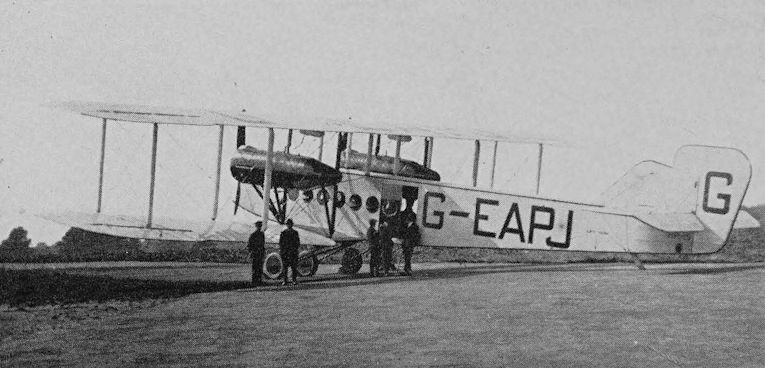
The prototype Handley Page W8 in its original competition form with fuel tanks in elongated nacelles.
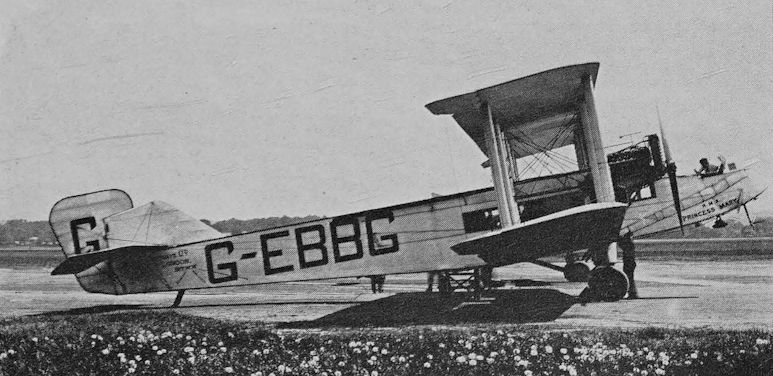
'Princess Mary’, first of the three Handley Page W8b passenger aircraft.
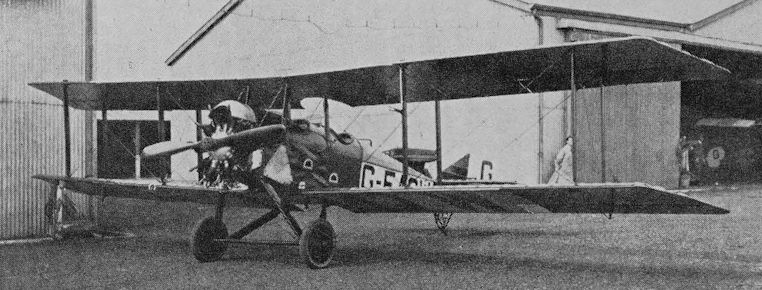
Improved version G-EAQW, 100 h.p. Anzani, no c/n, used during the 1914-18 war for parachuting experiments, registered to R. A. Whitehead 6.2.20, later sold to J. Coe and scrapped.
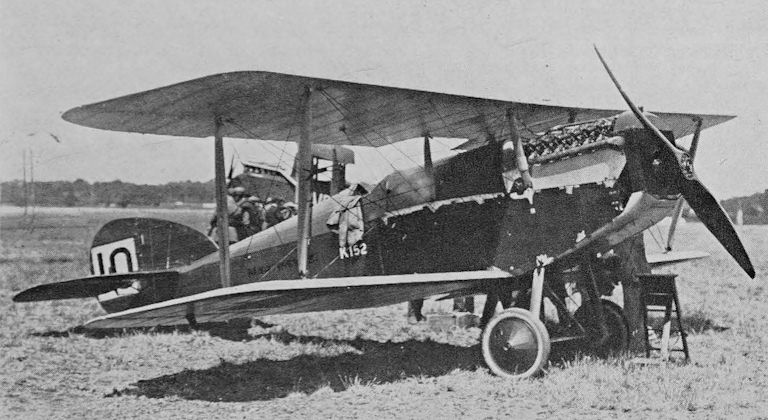
K-152, the Falcon engined Martinsyde F.4 at Hendon on Aerial Derby day 1919.
No. 10. - The Martinsyde F 4, 275 h.p. Rolls-Royce Falcon III, flown by Lieut. Robert Nisbet.
No. 10. - The Martinsyde F 4, 275 h.p. Rolls-Royce Falcon III, flown by Lieut. Robert Nisbet.
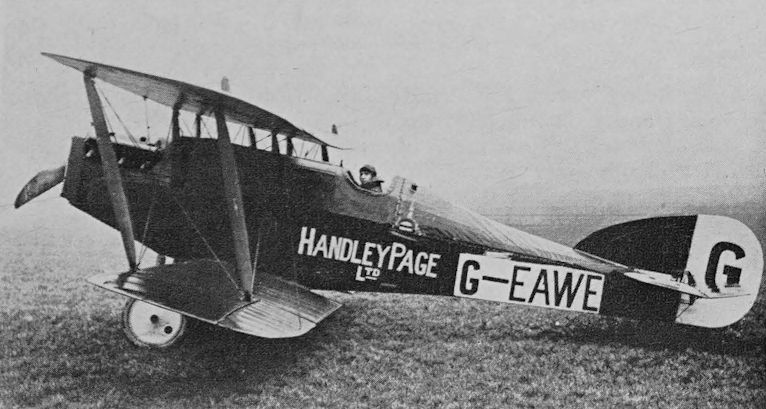
A standard F.4 fighter in civil guise at Croydon, just before leaving for Warsaw, January 29, 1921.
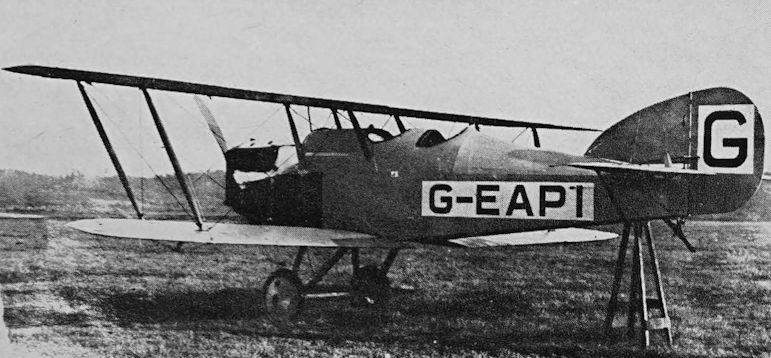
G-EAPI, first of the Martinsyde F.6 two seaters.
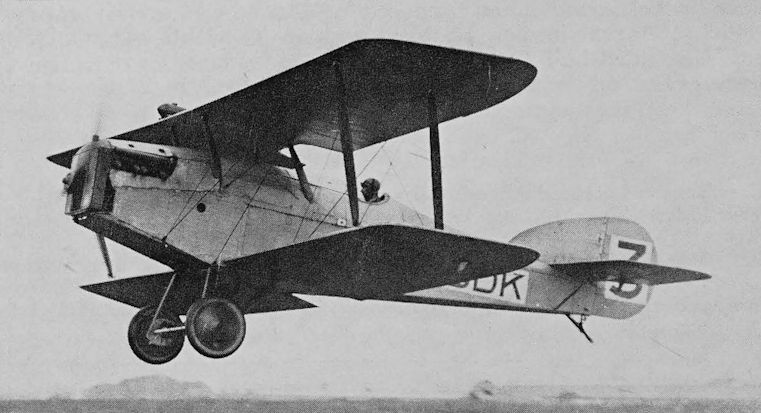
F. P. Raynham taking off from Croydon in the single seat Viper engined Martinsyde F.6 G-EBDK at the start of the 1922 King’s Cup Race.
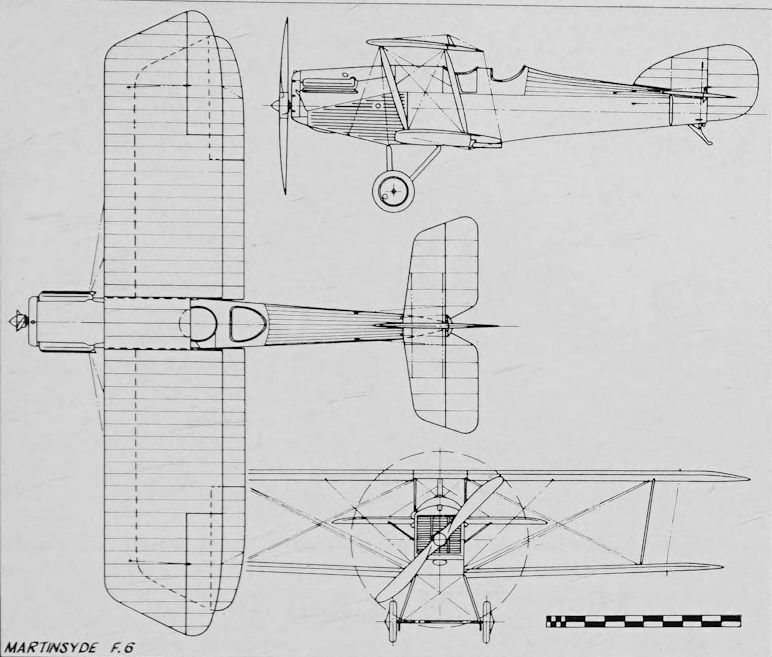
Martinsyde F.6
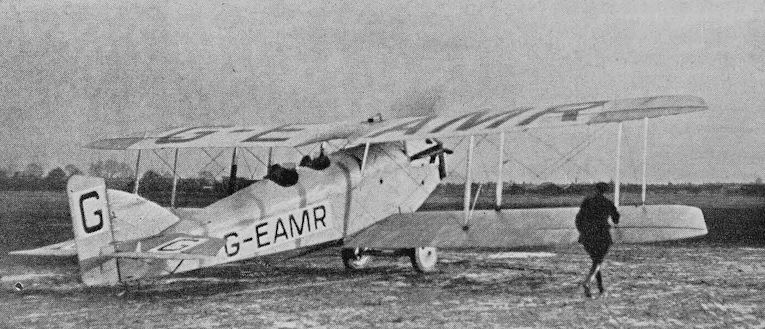
The ill fated Martinsyde Type A Mk. I leaving Hounslow for Australia, December 12, 1919.
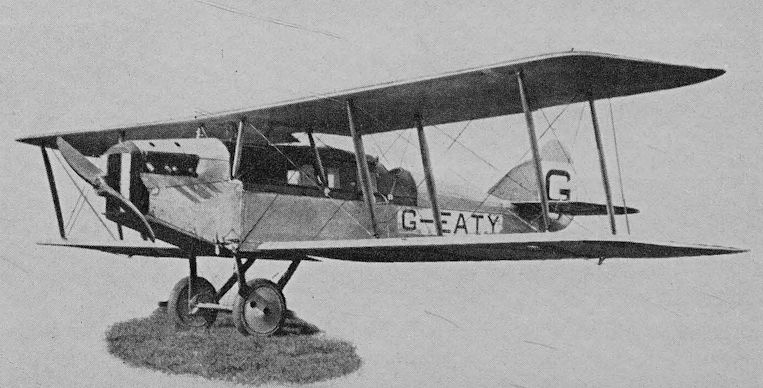
G-EATY, sole example of a Martinsyde Type A Mk. II to bear British civil marks.
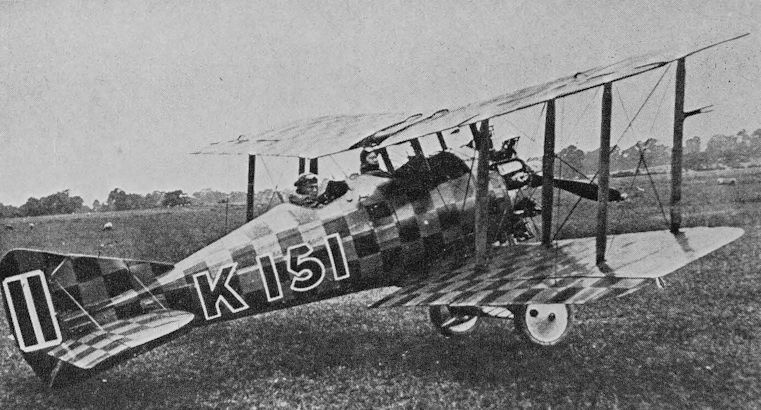
Nieuport Nighthawk
Nieuport Nieuhawk
A VERY SPORTY NIEUPORT SINGLE-SEATER: This machine is practically a modification of the "Night-hawk." It is said to possess a remarkable turn of speed
A VERY SPORTY NIEUPORT SINGLE-SEATER: This machine is practically a modification of the "Night-hawk." It is said to possess a remarkable turn of speed
Parnall Panther
F.E.2B
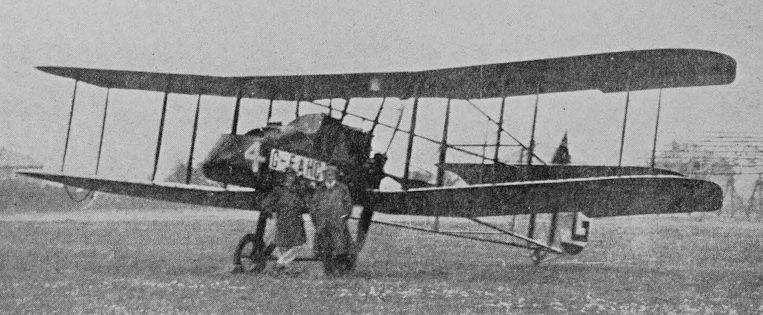
Two seat fighter powered by one 160 h.p. Beardmore, designed by the Royal Aircraft Factory, Farnborough, 1915 and widely sub-contracted. One British civil aircraft only, G-EAHC, formerly D3832, built by Richard Garrett and Sons at Leiston, Suffolk. Registered 14.7.19 to J. Carter Smith, C. of A, issued 8.8.19, sold to the Bournemouth Aviation Co. Ltd. 31.3.20 for instruction and joyriding. Crashed prior to 10.1.23.
Span, 47 ft. 9 in. Length, 32 ft. 3 in. Tare wt, 2,061 lb. A.U.W., 3,037 lb. Max. speed, 91-5 m.p.h.
Two seat fighter powered by one 160 h.p. Beardmore, designed by the Royal Aircraft Factory, Farnborough, 1915 and widely sub-contracted. One British civil aircraft only, G-EAHC, formerly D3832, built by Richard Garrett and Sons at Leiston, Suffolk. Registered 14.7.19 to J. Carter Smith, C. of A, issued 8.8.19, sold to the Bournemouth Aviation Co. Ltd. 31.3.20 for instruction and joyriding. Crashed prior to 10.1.23.
Span, 47 ft. 9 in. Length, 32 ft. 3 in. Tare wt, 2,061 lb. A.U.W., 3,037 lb. Max. speed, 91-5 m.p.h.
F.E.2B
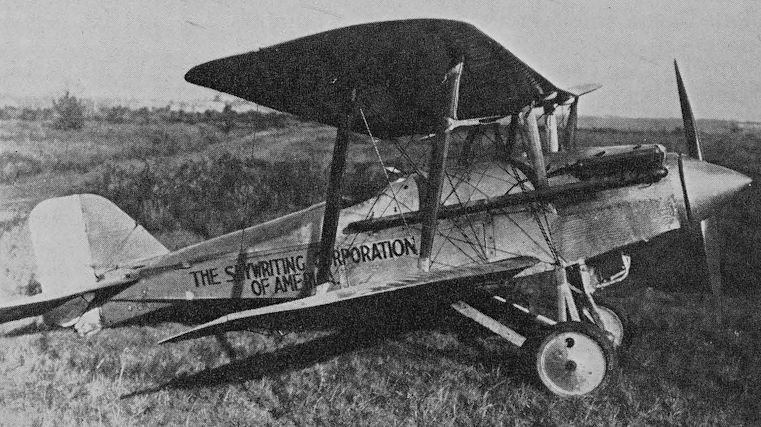
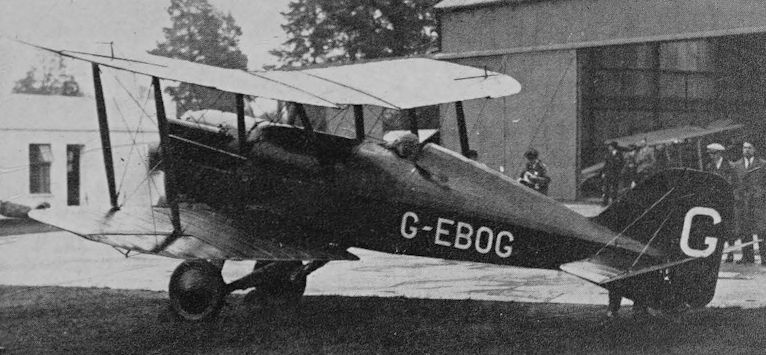
A postwar skywriting modification of S.E.5a G-EBGL (ex-F7960). Later skywriters had their exhausts extended beyond the tail, the rudder being divided to accommodate them.
Short exhaust pipes were retained on S.E.5As reworked for skywriting in the U.S.A. The identity mark G-EBGL is faintly visible on the under fin.
Short exhaust pipes were retained on S.E.5As reworked for skywriting in the U.S.A. The identity mark G-EBGL is faintly visible on the under fin.
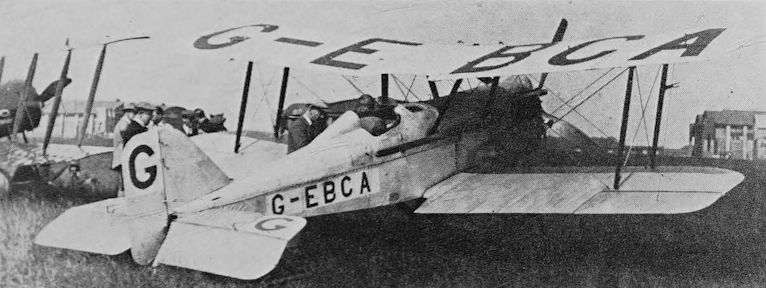
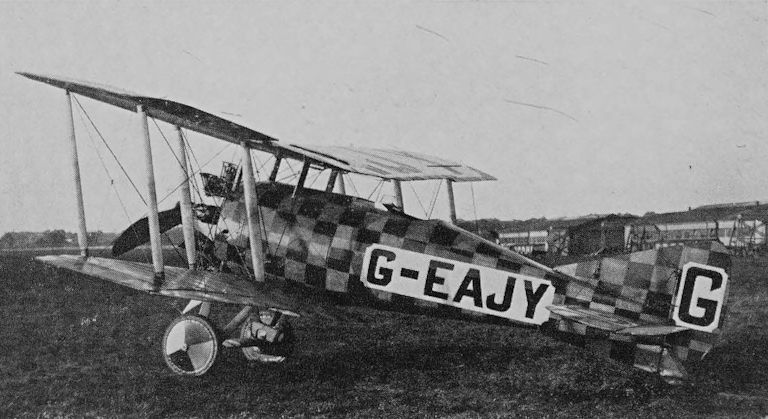
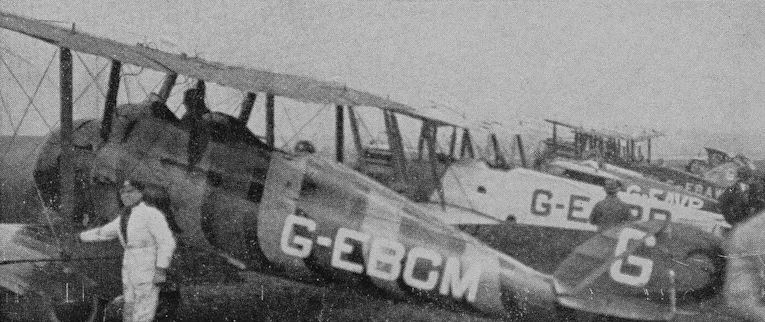
Dr. E. D. Whitehead Reid seated in his Renault engined S.E.5A before the start of the 1923 Grosvenor Trophy Race at Lympne.
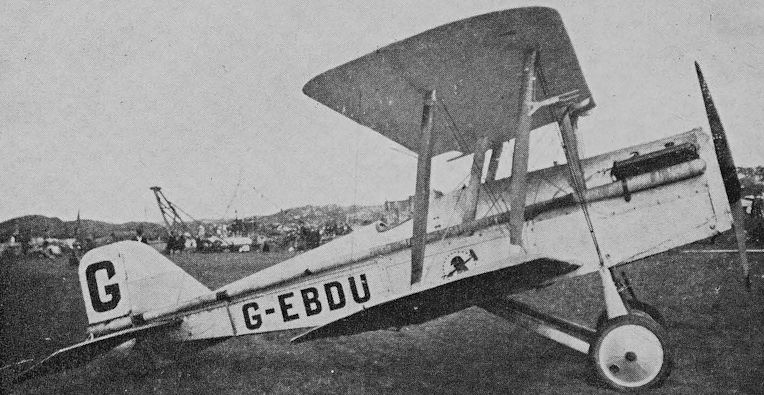
The Savage Skywriting Company’s S.E.5A ‘The Sweep’ at Gothenberg during M. L. Bramson’s demonstrations in 1923. The rudder was cut away to make way for the exhaust junction.
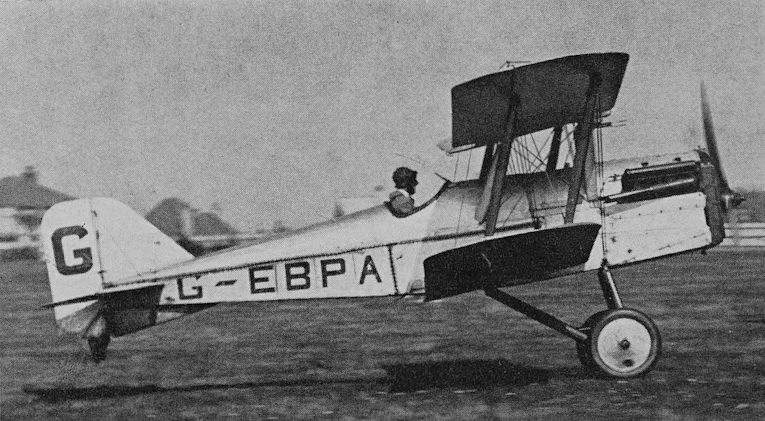
Е. Е. Stammers taking off in Mrs. Elliott Lynn’s S.E.5A at the start of the Bournemouth Killjoy Trophy Race, 18 April 1927.
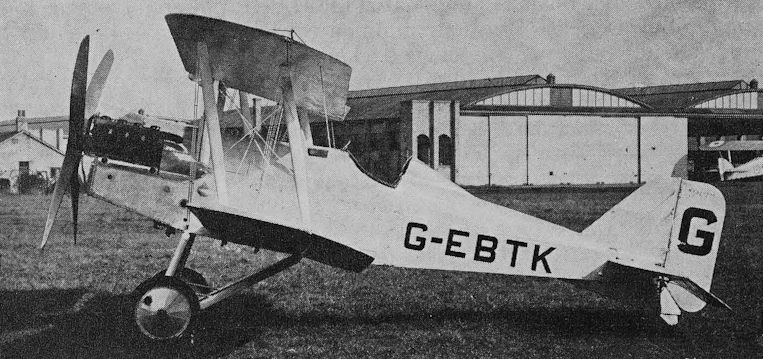
The R.A.F.IA engined S.E.5A built at Brooklands for L. R. Oldmeadows in 1927.
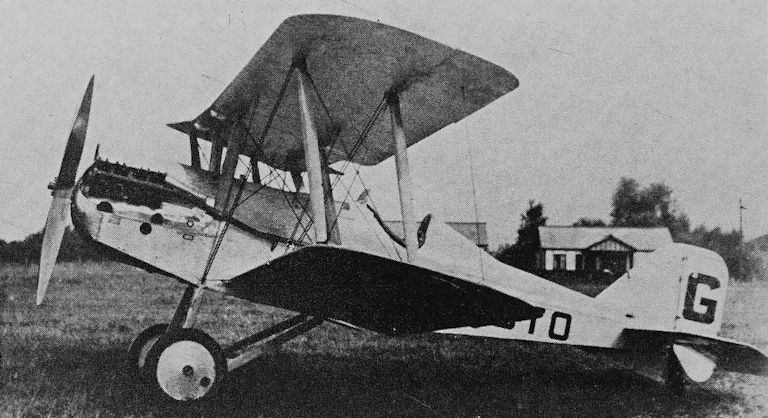
Walley Handley’s S.E.5A G-EBTO, with 120 h.p. Airdisco aircooled engine.
Dudley Watt, wearing his famous black and yellow check helmet, seated in the D.W.1 at Whitchurch, 1930.
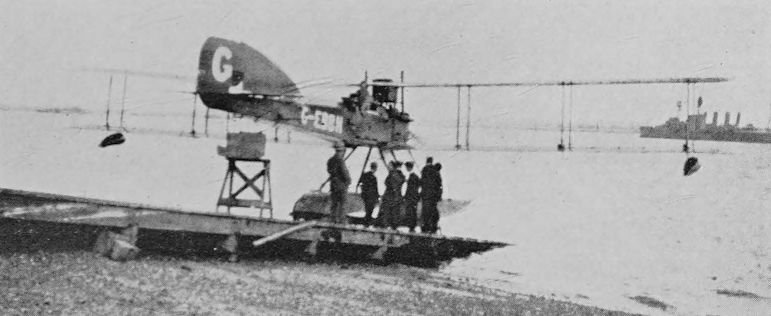
Short 184
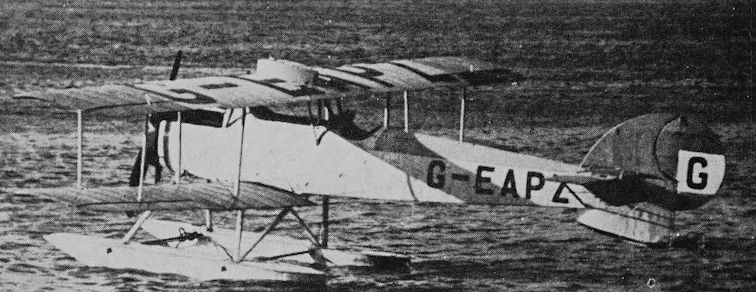
Short Shrimp
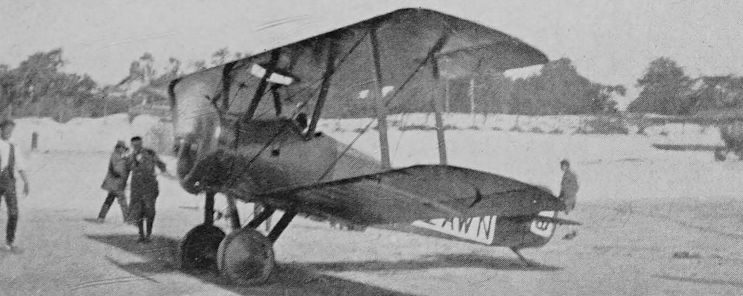
Sopwith F.1 Camel
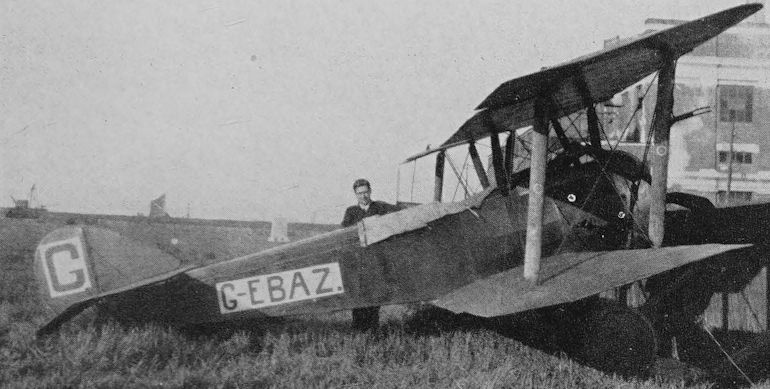
Sopwith Pup
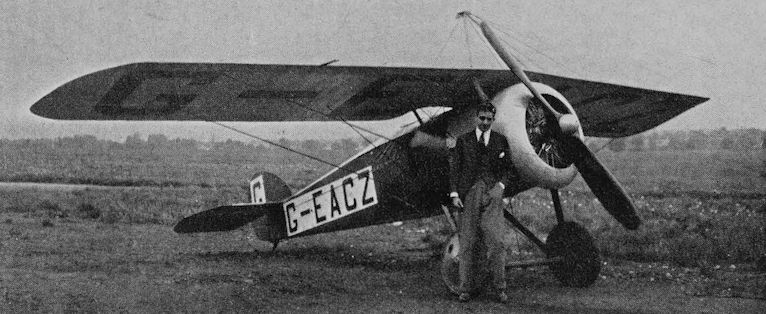
Sopwith Scooter
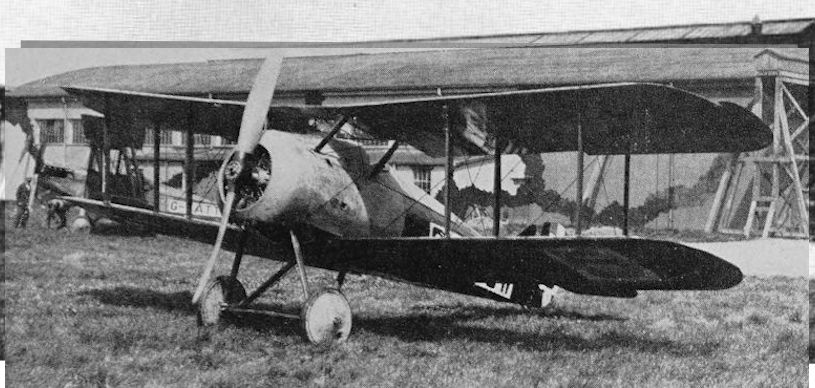
Fifth place in the 1920 Aerial Derby was secured by Capt W. L. Jordan with the Sopwith Snipe G-EAUW.
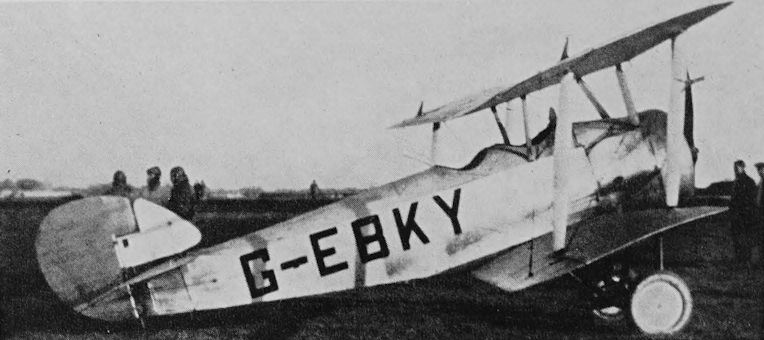
Sopwith Dove
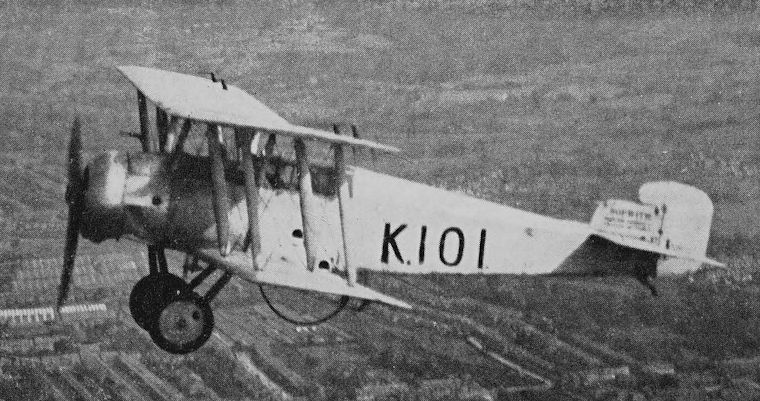
Harry Hawker flying the prototype cabin Gnu K-101, second British civil registered aeroplane, at Hendon, 29 May 1919.
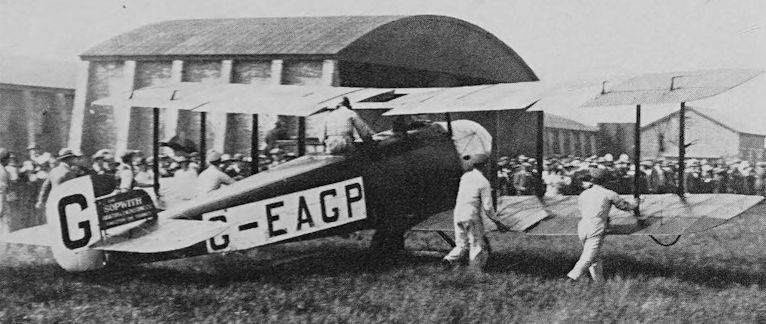
W. H. Longton taxying in at Lympne after winning the 1923 Grosvenor Trophy in the open cockpit Gnu G-EAGP.
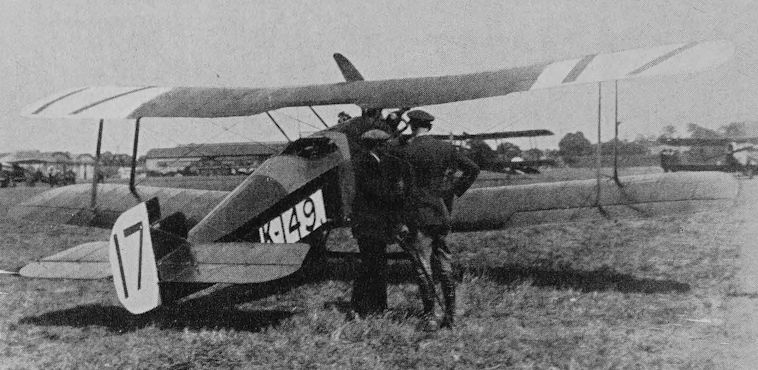
Sopwith R.M.1 Snapper
No. 17. - The Sopwith Snapper Biplane, 320 h.p. A.B.C. Dragonfly, which was to have been flown by Mr. H. G. Hawker. The authorities, however, refused to give permission for the machine to take part, the reason given, we believe, being that the engine was Government property. This attitude on the part of the Government naturally caused very keen disappointment.
No. 17. - The Sopwith Snapper Biplane, 320 h.p. A.B.C. Dragonfly, which was to have been flown by Mr. H. G. Hawker. The authorities, however, refused to give permission for the machine to take part, the reason given, we believe, being that the engine was Government property. This attitude on the part of the Government naturally caused very keen disappointment.
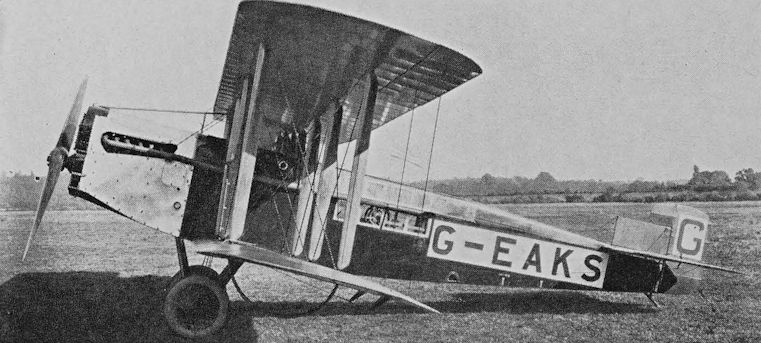
Sopwith Wallaby
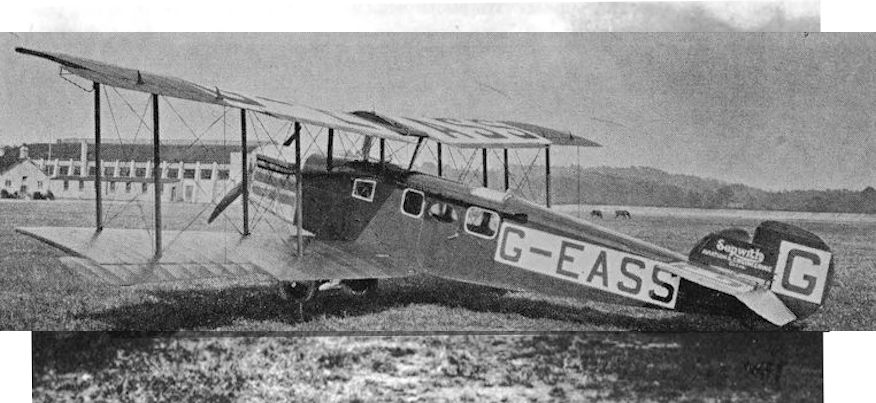
Although in this view the Antelope has the revised (inwardly tapering) ailerons, the struts betokening a four-wheeled landing gear are absent. Clearly seen is the sliding roof-hatch for the second passenger.
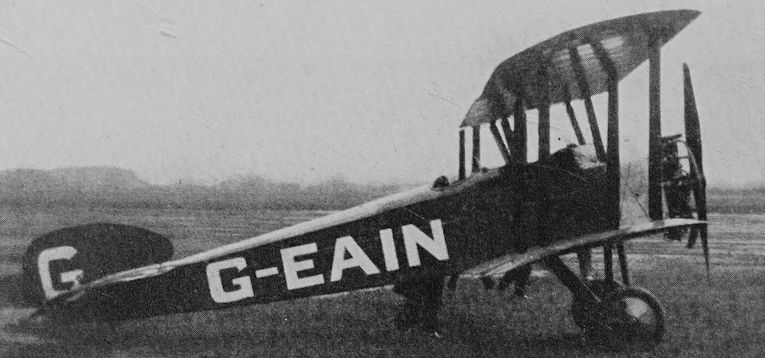
Sopwith Grasshopper
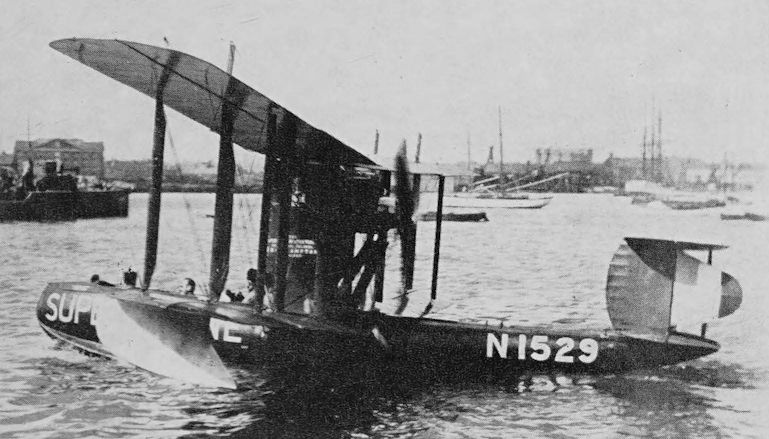
G-EAED/N1529, the first civil Channel, leaving Southampton on the inaugural flight to Le Havre, August 1919.
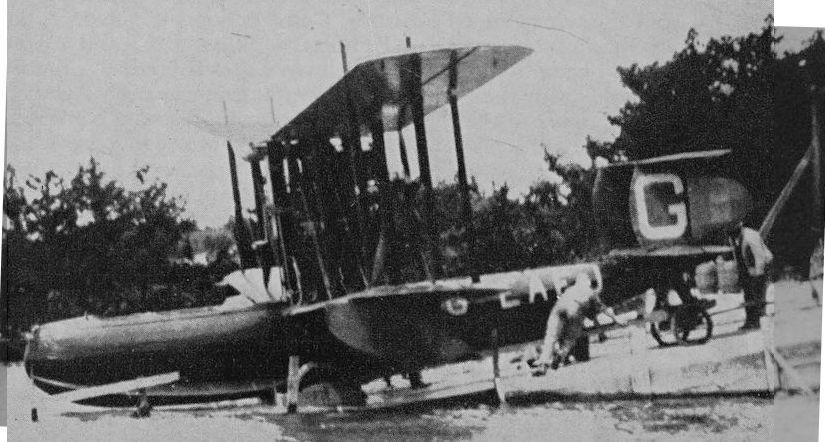
Launching Channel G-EAEJ of the Bermuda and Western Atlantic Aviation Co, Ltd.
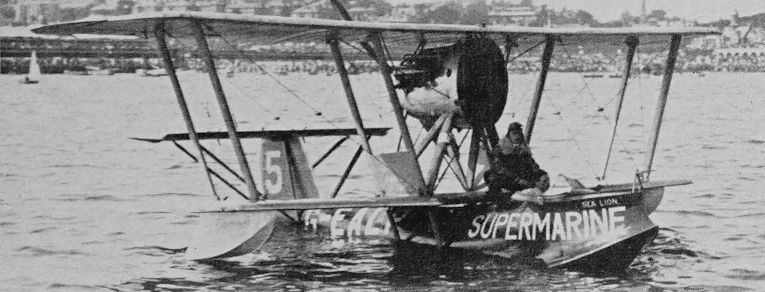
Supermarine Sea Lion I
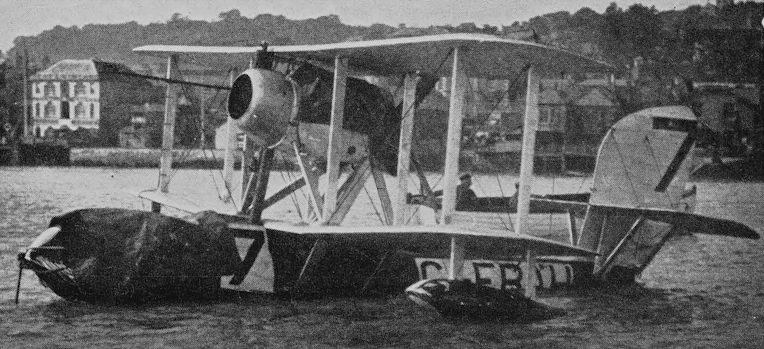
Supermarine Sea Lion III
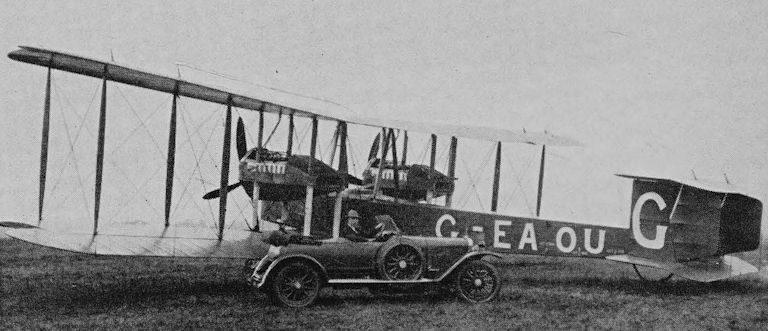
Sir John Alcock of Atlantic flight fame, with Sir Ross and Keith Smith’s 1919 Australia Flight Vimy IV.
VICKERS TYPE 54 VIKING I
Four seat cabin amphibian of wooden construction powered by one 375 h.p. Rolls-Royce Eagle VIII, designed by R. K. Pierson and built at Weybridge 1918 by Vickers Ltd. One aircraft only, G-EAOV, registered to the manufacturers 21.10.19, crashed near Rouen 18.12.19, pilot Sir John Alcock of Atlantic flight fame killed.
Span, 46 ft. 0 in. Length, 39 ft. 0 in. A.U.W., 4,545 lb. Max. speed, 104 m.p.h. Cruise, 85 m.p.h.
VICKERS TYPE 59 VIKING II AND III
Four seat open amphibian powered by one 375 h.p. Rolls-Royce Eagle VIII (Viking II) or one 450 h.p. Napier Lion (Viking III). Two British aircraft only: G-EASC Viking II exhibited at Olympia 7.20, 1st prize in the Antwerp Seaplane Trials 8.20, later crashed; G-EAUK Viking III, 1st prize in the Air Ministry Amphibian Competition 9.20 piloted by Capt. S. Cockerell. Sold to the Air Council 19.1.21 as N147. Trial landings on the Thames at Westminster 7.2.21 and 17.3.21, and on the Seine, Paris, 29.4.21, scrapped 1925.
Span, 46 ft. 0 in. Length, 32 ft. 0 in. Tare wt., 2,740 lb. A.U.W., 4,545 lb. Max. speed, 110 m.p.h. Cruise, 90 m.p.h.
VICKERS TYPE 60 VIKING IV
Six seat amphibian powered by one 450 h.p. Napier Lion. Two British civil aircraft only: G-EBBZ, c/n 15, registered to Sir Ross Smith 14.93.99 for a world flight, crashed on test at Brooklands 13.4.22, Sir Ross and Lt. Bennett, who made the Vimy flight to Australia, killed; G-EBED, c/n 17, C. of A. issued 6.10.22 for demonstration in Madrid, operated on winter sports service between Croydon, St. Moritz and Nice, 21.1.26 to 1.3.26, by Leslie Hamilton, to whom it was sold 7.26. Scrapped 12.29.
Span 50 ft. 0 in. Length, 35 ft. 0 in. Tare wt., 3,728 Ib. A.U.W., 5,600 Ib. Max. speed, 105 m.p.h. Cruise, 90 m.p.h.
Four seat cabin amphibian of wooden construction powered by one 375 h.p. Rolls-Royce Eagle VIII, designed by R. K. Pierson and built at Weybridge 1918 by Vickers Ltd. One aircraft only, G-EAOV, registered to the manufacturers 21.10.19, crashed near Rouen 18.12.19, pilot Sir John Alcock of Atlantic flight fame killed.
Span, 46 ft. 0 in. Length, 39 ft. 0 in. A.U.W., 4,545 lb. Max. speed, 104 m.p.h. Cruise, 85 m.p.h.
VICKERS TYPE 59 VIKING II AND III
Four seat open amphibian powered by one 375 h.p. Rolls-Royce Eagle VIII (Viking II) or one 450 h.p. Napier Lion (Viking III). Two British aircraft only: G-EASC Viking II exhibited at Olympia 7.20, 1st prize in the Antwerp Seaplane Trials 8.20, later crashed; G-EAUK Viking III, 1st prize in the Air Ministry Amphibian Competition 9.20 piloted by Capt. S. Cockerell. Sold to the Air Council 19.1.21 as N147. Trial landings on the Thames at Westminster 7.2.21 and 17.3.21, and on the Seine, Paris, 29.4.21, scrapped 1925.
Span, 46 ft. 0 in. Length, 32 ft. 0 in. Tare wt., 2,740 lb. A.U.W., 4,545 lb. Max. speed, 110 m.p.h. Cruise, 90 m.p.h.
VICKERS TYPE 60 VIKING IV
Six seat amphibian powered by one 450 h.p. Napier Lion. Two British civil aircraft only: G-EBBZ, c/n 15, registered to Sir Ross Smith 14.93.99 for a world flight, crashed on test at Brooklands 13.4.22, Sir Ross and Lt. Bennett, who made the Vimy flight to Australia, killed; G-EBED, c/n 17, C. of A. issued 6.10.22 for demonstration in Madrid, operated on winter sports service between Croydon, St. Moritz and Nice, 21.1.26 to 1.3.26, by Leslie Hamilton, to whom it was sold 7.26. Scrapped 12.29.
Span 50 ft. 0 in. Length, 35 ft. 0 in. Tare wt., 3,728 Ib. A.U.W., 5,600 Ib. Max. speed, 105 m.p.h. Cruise, 90 m.p.h.
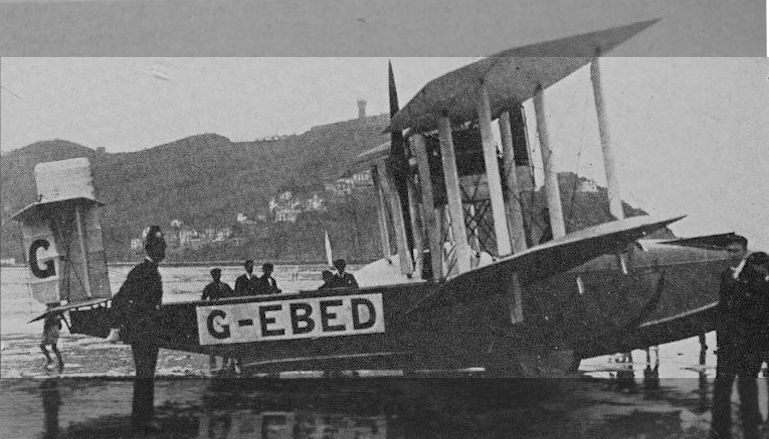
Vickers Type 60 Viking Mk. IV G-EBED during the Vickers sales tour of Spain in 1923.
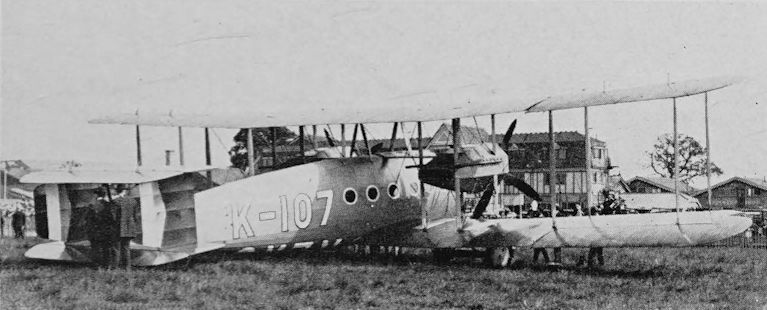
K-107, the F.B.27B prototype at Hendon in July 1919, showing the circular windows.
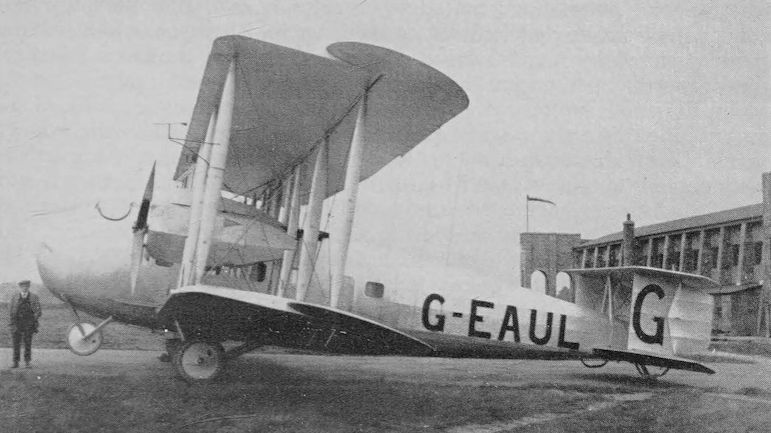
The Air Ministry Competition Vimy Commercial at.Martlesham in August 1920.
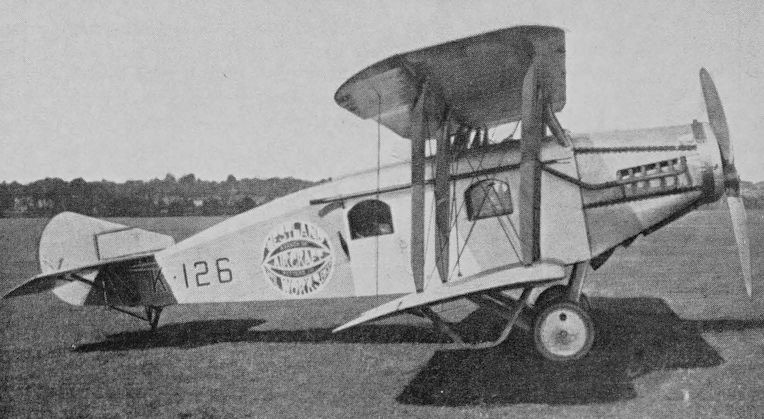
The prototype Rolls-Royce Falcon powered Westland Limousine I.
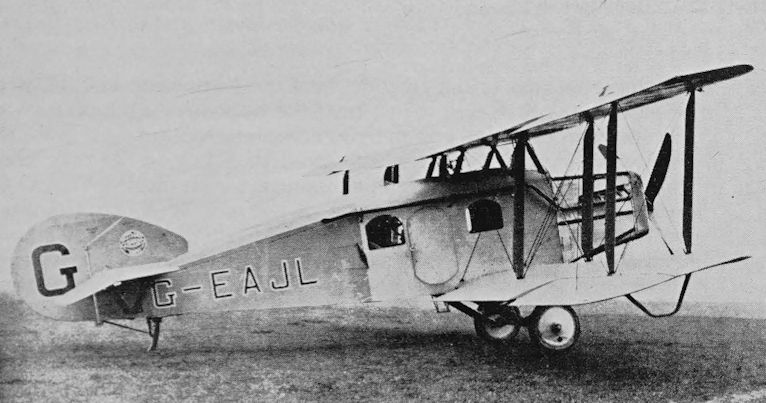
The Limousine II G-EAJL with modified cowlings and enlarged vertical tail surfaces.
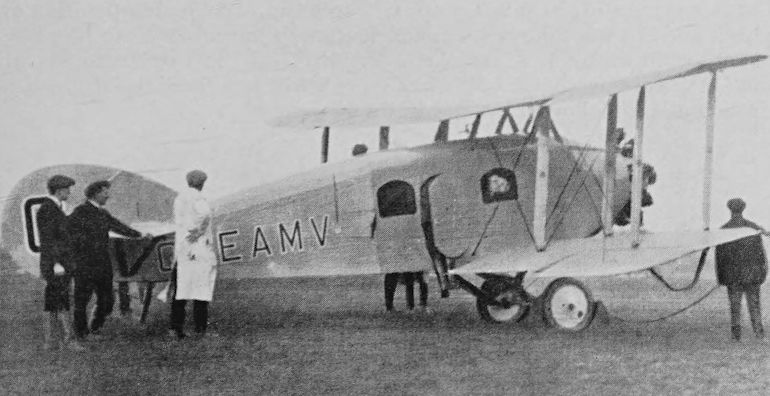
The Jupiter powered Limousine II G-EAMV with the pilot's head projecting above the rear fuselage.
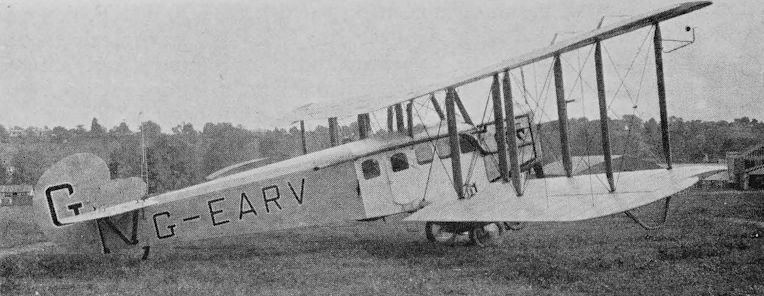
G-EARV, first of the two Limousine IIIs and winner of the Air Ministry prize, 1920.
JUNKERS F.13fe
Low-wing monoplane of all-metal construction for two crew in open cockpit and four cabin passengers, powered by one 385 h.p. Junkers L.5, in production from 1919 by the Junkers Flugzeug und Motorenwerke A.G. at Dessau, Germany. One British aircraft only, G-EBZV, c/n 2024, C. of A. issued 13.7.28, owner Rt. Hon. F. E. Guest of Hanworth, sold 5.30 to L. Beardmore, Hanworth, fitted with 450 h.p. Bristol Jupiter VI engine 1930. Sold to Lord Sempill 5.32. Sold in Sweden 4.37 as SE-AFW.
Span, 58 ft. 3in. Length, 31 ft.6in. Tare wt., 3,330 lb. A.U.W., 5,960 lb. Max. speed, 123 m.p.h. Cruise, 106 m.p.h.
JUNKERS F.13
1929 model with enclosed cockpit, revised windows and locker. Four British aircraft only: G-AAGU, no known c/n, C. of A. issued 30.5.29, Trost Bros. Ltd. of Croydon, to Walcot Air Lines 5.30, to South African Airways 12.32 as ZS-AEN; G-AAZK, c/n 2052, C. of A. issued 4.6.30, Walcot Air Lines, structural failure in the air, Meopham, Kent, 21.7.30, G. L. P. Henderson and five passengers killed; G-ABDG, c/n 2074, C. of A. issued 23.8.30, Personal Flying Services Ltd., Heston, to Brooklands Airways Ltd. 4.33, sold in Sweden 12.34 as SE-AEC; G-ABDD, c/n 2005, C. of A. issued 22.7.30, Trost Bros. Ltd. Sold abroad 8.30.
Span, 58 ft. 3 in. Length, 31 ft. 6 in.
Low-wing monoplane of all-metal construction for two crew in open cockpit and four cabin passengers, powered by one 385 h.p. Junkers L.5, in production from 1919 by the Junkers Flugzeug und Motorenwerke A.G. at Dessau, Germany. One British aircraft only, G-EBZV, c/n 2024, C. of A. issued 13.7.28, owner Rt. Hon. F. E. Guest of Hanworth, sold 5.30 to L. Beardmore, Hanworth, fitted with 450 h.p. Bristol Jupiter VI engine 1930. Sold to Lord Sempill 5.32. Sold in Sweden 4.37 as SE-AFW.
Span, 58 ft. 3in. Length, 31 ft.6in. Tare wt., 3,330 lb. A.U.W., 5,960 lb. Max. speed, 123 m.p.h. Cruise, 106 m.p.h.
JUNKERS F.13
1929 model with enclosed cockpit, revised windows and locker. Four British aircraft only: G-AAGU, no known c/n, C. of A. issued 30.5.29, Trost Bros. Ltd. of Croydon, to Walcot Air Lines 5.30, to South African Airways 12.32 as ZS-AEN; G-AAZK, c/n 2052, C. of A. issued 4.6.30, Walcot Air Lines, structural failure in the air, Meopham, Kent, 21.7.30, G. L. P. Henderson and five passengers killed; G-ABDG, c/n 2074, C. of A. issued 23.8.30, Personal Flying Services Ltd., Heston, to Brooklands Airways Ltd. 4.33, sold in Sweden 12.34 as SE-AEC; G-ABDD, c/n 2005, C. of A. issued 22.7.30, Trost Bros. Ltd. Sold abroad 8.30.
Span, 58 ft. 3 in. Length, 31 ft. 6 in.
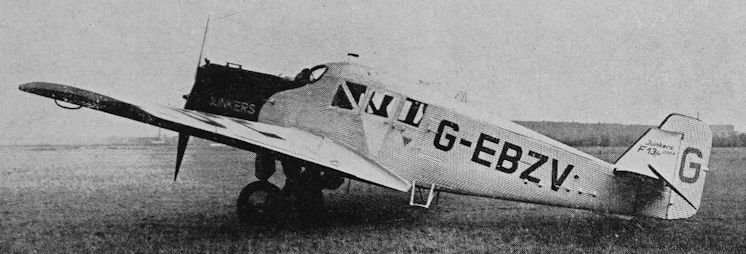
Junkers F.13fe
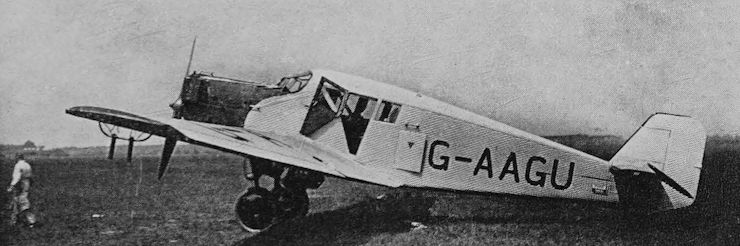
Junkers F.13
HANRIOT HD-1
Single seat fighter powered by one 110 h.p. Le Rhone, in production by Hanriot et Cie. at Billancourt, France 1916-18. One British aircraft only, G-AFDX, a Belgian Air Force machine civilianised 1934 as OO-APJ, flown from Brussels to Old Warden, Beds, by R. Shuttleworth and exhibited at the R.Ae.S. Garden Party, Heathrow, 8.5.38. Lost a wheel on take off from Brooklands 17.6.39, turned over landing at Old Warden. Wings destroyed by bombing at Brooklands 1940, fuselage currently stored at Old Warden.
Span, 28 ft. 6 1/2 in. Length, 19 ft. 1 7/8 in. Tare wt., 904 Ib. A.U.W., 1,521 Ib. Max. speed, 100 m.p.h.
Single seat fighter powered by one 110 h.p. Le Rhone, in production by Hanriot et Cie. at Billancourt, France 1916-18. One British aircraft only, G-AFDX, a Belgian Air Force machine civilianised 1934 as OO-APJ, flown from Brussels to Old Warden, Beds, by R. Shuttleworth and exhibited at the R.Ae.S. Garden Party, Heathrow, 8.5.38. Lost a wheel on take off from Brooklands 17.6.39, turned over landing at Old Warden. Wings destroyed by bombing at Brooklands 1940, fuselage currently stored at Old Warden.
Span, 28 ft. 6 1/2 in. Length, 19 ft. 1 7/8 in. Tare wt., 904 Ib. A.U.W., 1,521 Ib. Max. speed, 100 m.p.h.
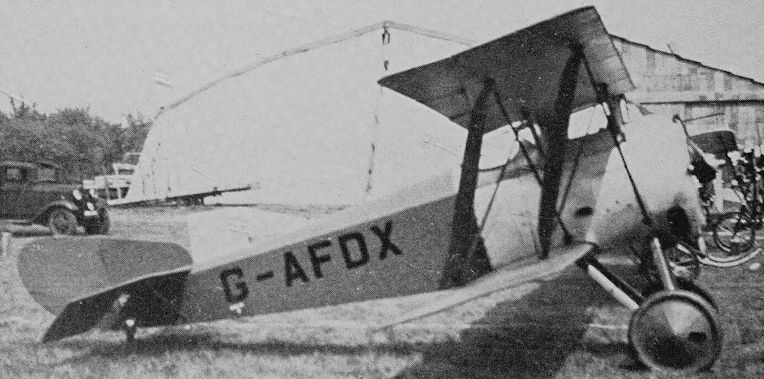
Hanriot HD-1
Another metamorphosis for N10, G-EALQ, was a conversion to amphibious form for an Air Ministry competition in September 1920. It is seen here taxying in at Waddon aerodrome, Croydon, in October, when civil aircraft were on display for delegates at an air conference in London.